From 1 Designer to 13: Building Team & Product in Parallel
Joined as the only designer. Built a team of 13 from scratch, created all processes, and scaled portal delivery from 0 to 4+ per month — while maintaining quality across every output.
Product type
Fintech / SaaS
B2B
Role
Head of Design
Timeline
18+ months
Scale
13 designers
30+ portals
Company
Axcera
Context & Challenge
A fintech company was selling white-label client portals to forex brokers. Each broker needed a unique, branded portal — not a template, but a fully custom design with its own visual language, design system, and mobile adaptation.
The company had no design team, no design process, and no scalable way to deliver. The CTO had spent 7 months designing the first portal alone. The business needed to scale — fast.
The task: build the design function from scratch, hire and lead a team, establish all processes, and deliver portals at a pace that matches business growth.
Business Challenges
No design team, no process, no documentation
First portal took CTO 7 months to deliver alone
Growing client demand with no capacity to fulfil it
CEO changed direction frequently — required process resilience
Each portal needed to be unique — no simple templating
Design Challenges
Build design system from zero for every new brand
Maintain visual quality across 13 designers working in parallel
Deliver full portals (30–40 screens + design system + mobile) in ~1 month
Align with CEO who couldn’t read wireframes — visual concepts only
Coordinate with developers on handoff standards and implementation
Train designers in trading domain basics — they needed to understand the product to design it well
Project Constraints
Extreme deadlines: 2 weeks for concept approval, 1 month for full portal delivery. Non-negotiable business timelines.
CEO decision-making: Wireframes were not understood — every concept had to be presented as finished visual design. Direction changed frequently, requiring fast iteration and team resilience.
No prior infrastructure: No design system base, no documentation, no handoff process, no onboarding materials — all built from scratch.
Quality at scale: 13 designers working simultaneously on different portals. Consistency and quality had to be maintained without slowing down delivery.
Unique per brand: Every portal needed its own visual language. No two portals could look alike — this was a selling point for broker clients.
My Role
Joined as the first and only designer. Over 11 months, built everything — the team, the process, and the product — simultaneously.
Design leadership
Led all design decisions across 30+ portals. Final review and approval on every output before client delivery.
Team building
Hired all 13 designers from scratch. Built onboarding, training, quality guidelines, and review process.
Process architecture
Created all documentation, handoff standards, design review structure, and team workflows from zero.
Stakeholder management
Direct communication with CEO and CTO. Managed frequent direction changes while protecting team capacity and deadlines.
How We Defined Success
Success was commercial and operational — measured by sales and delivery capacity
Portal sell-through rate — every designed portal must result in a signed client contract
Delivery velocity — number of portals delivered per month, tracked against business targets
Design quality consistency — no portal leaves the team without passing design review
Team ramp-up speed — new designers productive within their first weeks
CEO approval rate — concepts approved within 2-week window without full restarts
Work Journey
Two parallel tracks ran throughout: building the infrastructure (team, process, documentation) and delivering product (portals, design systems, mobile). Neither could wait for the other.
Stage 1: Foundation (Solo)
First 6 months alone — built design system, established dev collaboration, aligned with CEO and CTO on vision and process.
Stage 2: Team Building
Hired all 13 designers from scratch. Built onboarding, quality guidelines, and design review process simultaneously.
Stage 3: Process Design
Defined how portals are conceived, designed, reviewed, and delivered. Every workflow documented and standardised.
Stage 4: Concept & Approval
~2 weeks per portal: visual concept created, presented to CEO, iterated until approved before full design begins.
Stage 5: Design & Delivery
Full portal design: 30–40 screens + design system + mobile adaptation + payment pages. Reviewed at every stage.
Stage 6: Scale & Optimise
Grew to 4 portals/month average, 6–7 at peak. Maintained quality across all outputs. 10–15 B2B clients signed monthly.
Stage 1:
Foundation — 6 Months Solo
Before any hiring, the foundation had to be built. Six months as the only designer meant doing everything simultaneously.
Establishing Developer Collaboration
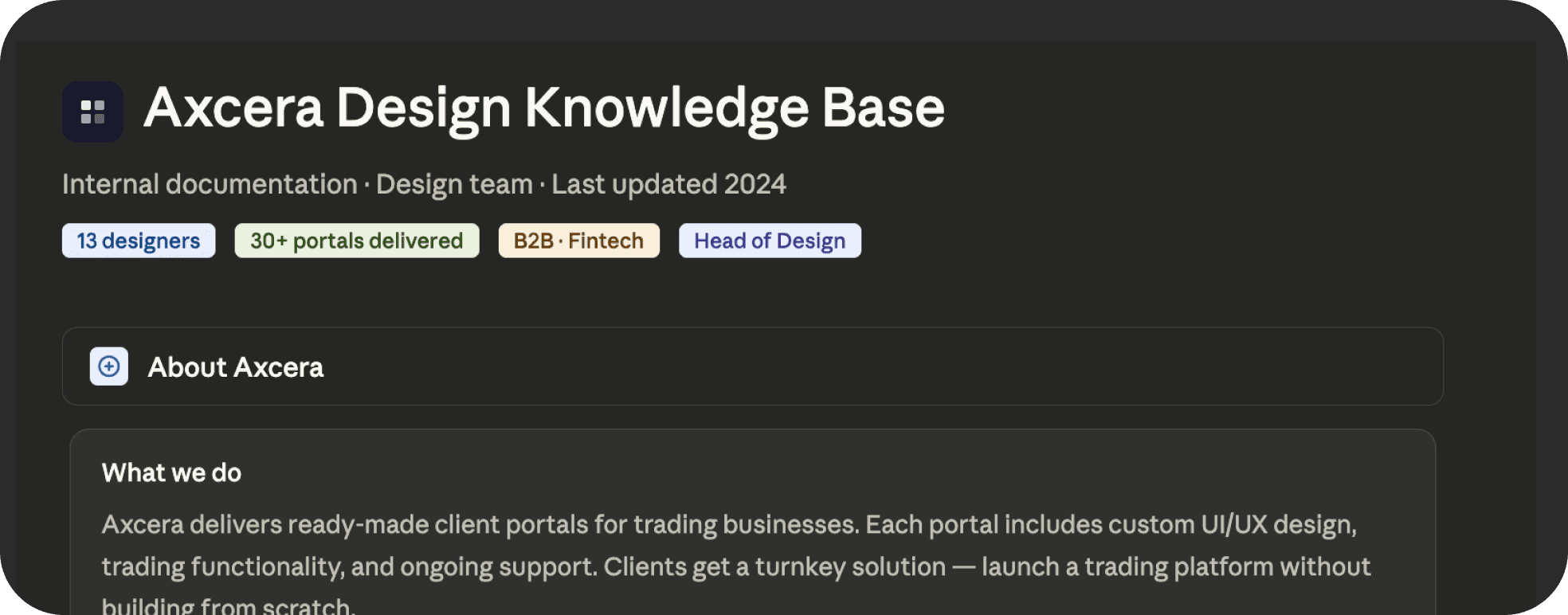
No handoff process existed. Developers had been receiving designs inconsistently. I established:
Figma annotation standards — every screen documented with specs, states, and interaction notes
Component naming conventions — consistent across all files for developer reference
Initiated regular check-ins with developers — catching implementation issues before they became blockers
Shared understanding of what ‘done’ means — agreed definition of design-ready vs development-ready
Aligning with Leadership
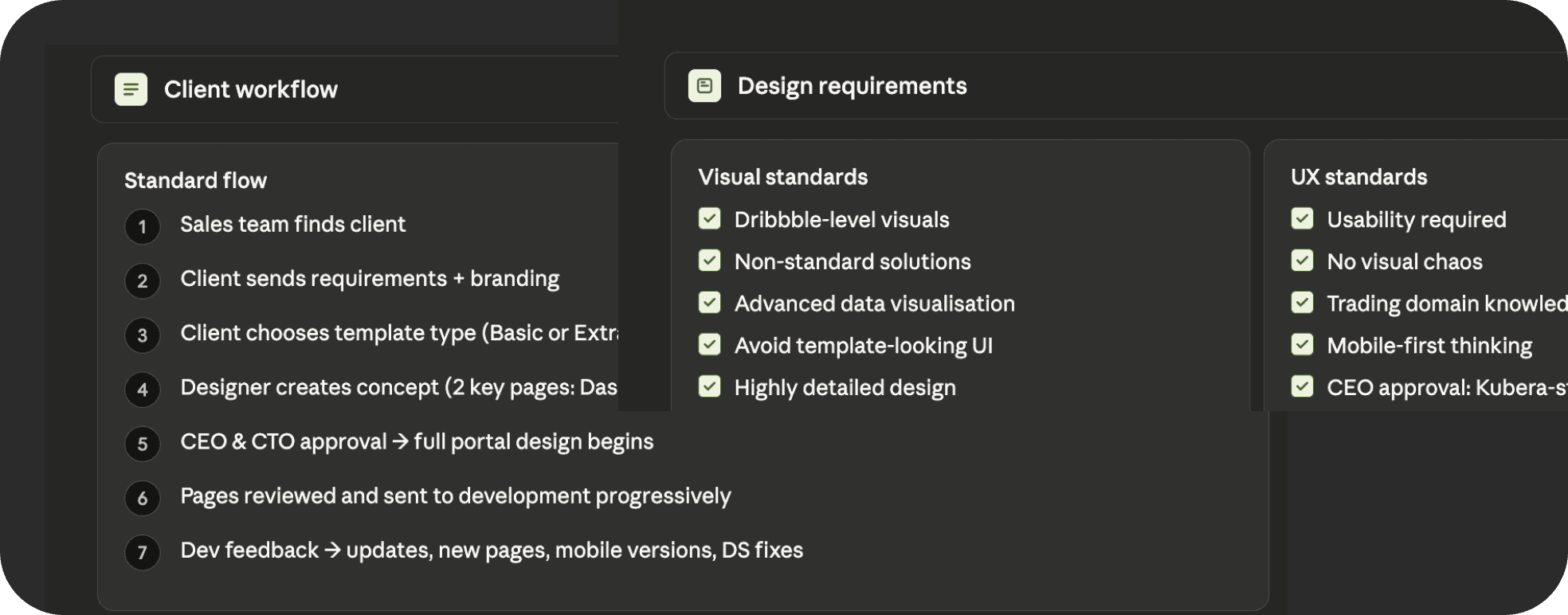
CEO and CTO had very different mental models of design. Key challenge: the CEO couldn’t read wireframes or low-fidelity concepts — every decision required finished visual design. This shaped the entire workflow:
All concepts presented as high-fidelity visuals from day one
Feedback loops structured around visual output, not process documentation
Direction changes absorbed at concept stage — before full team engagement
The CEO changing direction mid-project was a recurring challenge. The solution was structural: keep the concept approval phase tight (2 weeks maximum) so that changes happened before full portal design began — not during it.
Building the Design System Base
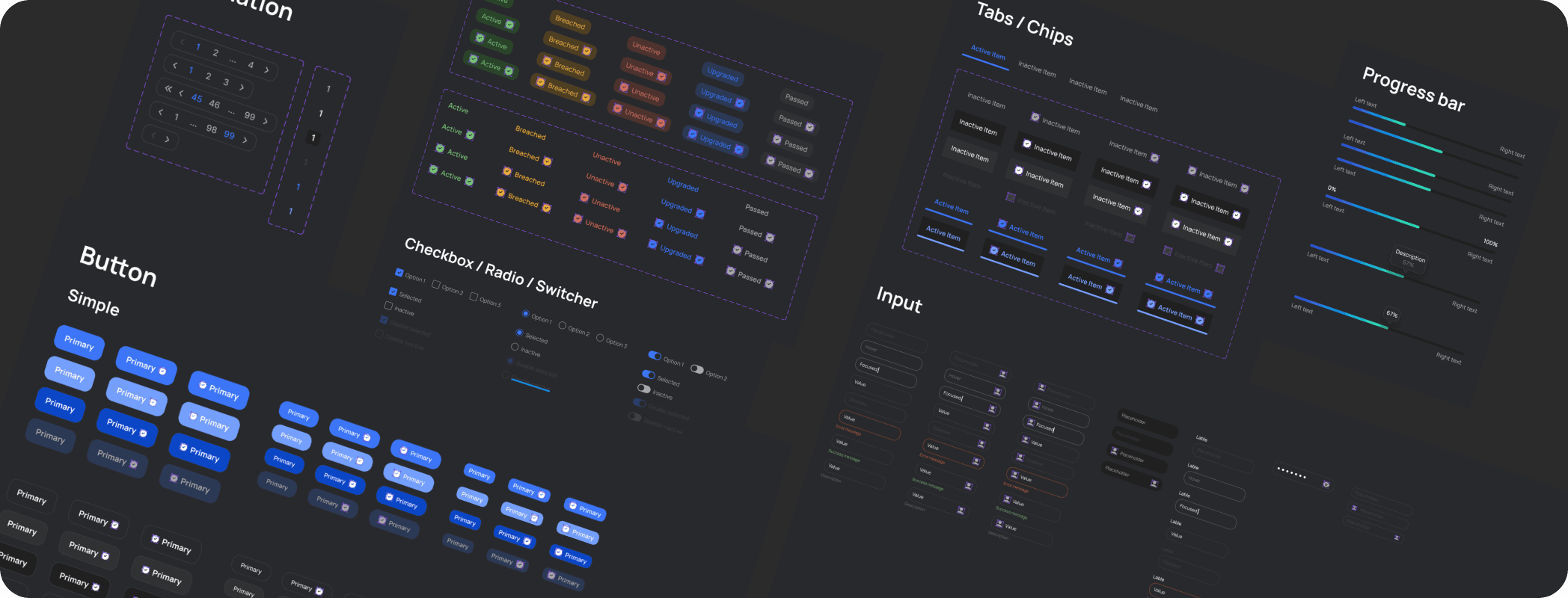
Every portal needed its own design system — but the process for creating them had to be standardised. I built a reusable framework: not a shared visual language, but a shared methodology. Same structure, same component categories, same documentation format — different visual expression per brand.
Stage 2:
Building the Team
After 6 months establishing the foundation, the business needed to scale output. I hired all 13 designers — sourcing, interviewing, and selecting every one personally.
Hiring Criteria
With extreme deadlines and high visual bar, hiring for the right profile was critical:
Strong visual design skills — portals were sold on aesthetics, not just UX
Ability to work independently — each designer owned their portal end-to-end
Adaptability — direction could change; designers had to absorb it without derailing
Speed without sacrificing quality — the core tension of the role
Strong UX thinking — beauty alone doesn't sell a financial product
Advanced Figma — design system architecture, not just screens
Onboarding & Training
With 13 designers onboarding in waves, structured onboarding was essential:
Written onboarding documentation — process, tools, quality standards, file structure
Design system methodology guide — how to build a brand design system from scratch
Quality guidelines — what passes design review and what doesn’t
Figma file standards — naming, component structure, handoff preparation
Trading domain training — designers needed working knowledge of client portals, trading accounts, and financial flows to design them accurately
Design Review Process
Three review stages ensured quality at every level:
Team design reviews — weekly calls where every portal in progress was reviewed collectively. Team gave feedback, I gave final assessment. Two purposes: quality control and team learning.
CEO & CTO approval — concepts presented at high-fidelity before full design began. Direction changes absorbed at this stage, not mid-delivery.
Developer handoff — annotated Figma files with specs, states, and interaction notes. Regular check-ins with developers to catch implementation issues early.
Stage 3:
The Portal Design Process
Every portal followed the same process — tight, repeatable, with quality gates at each stage.
Phase 1: Visual Concept
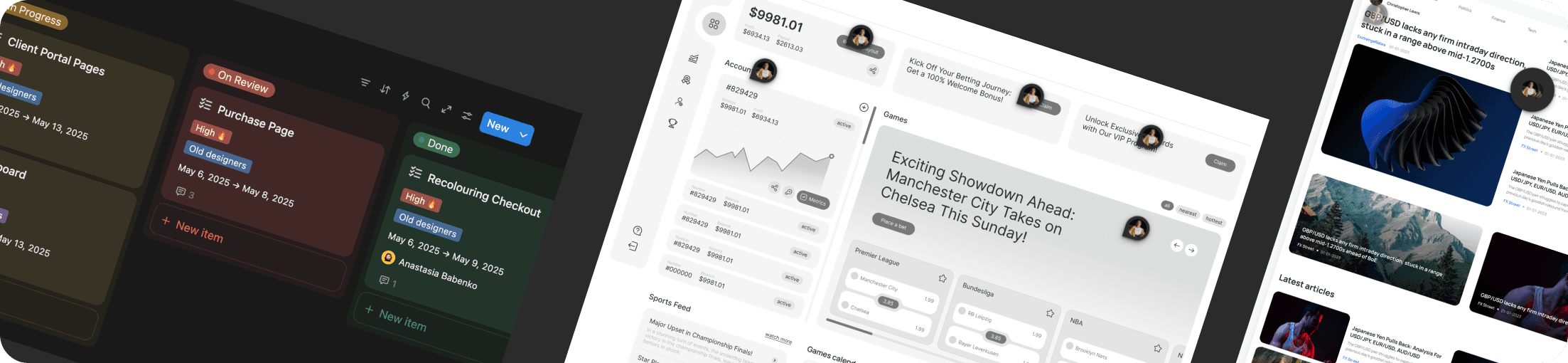
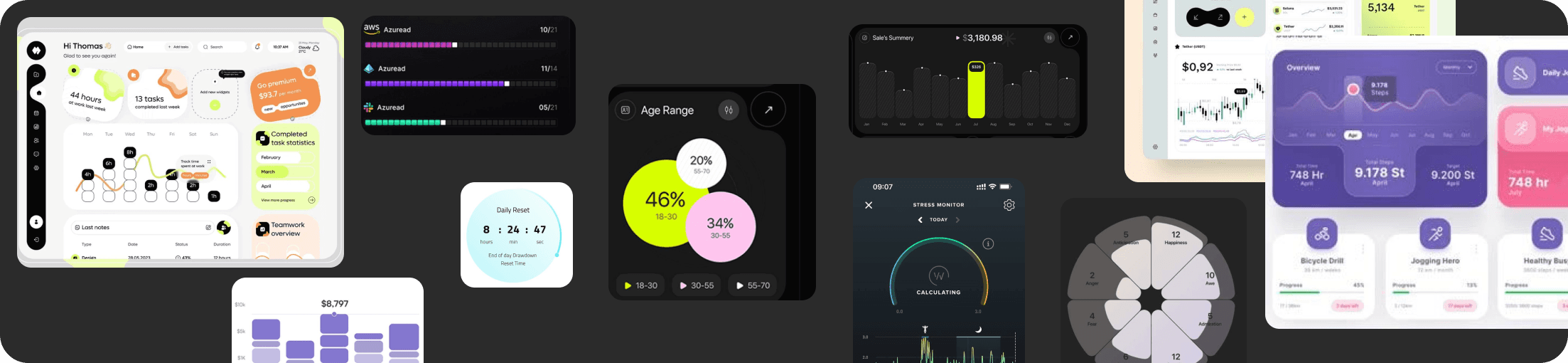
Each new portal started with a visual concept — a full high-fidelity direction presented to the CEO for approval. No wireframes. The concept had to show the brand identity, colour palette, typography, and key screen layouts.
Concepts were researched extensively — visual inspiration, market differentiation, brand positioning. The goal: create something visually unique enough to be a selling point for the broker client — without compromising usability for the traders who would use it daily.
Phase 2: Portal Architecture
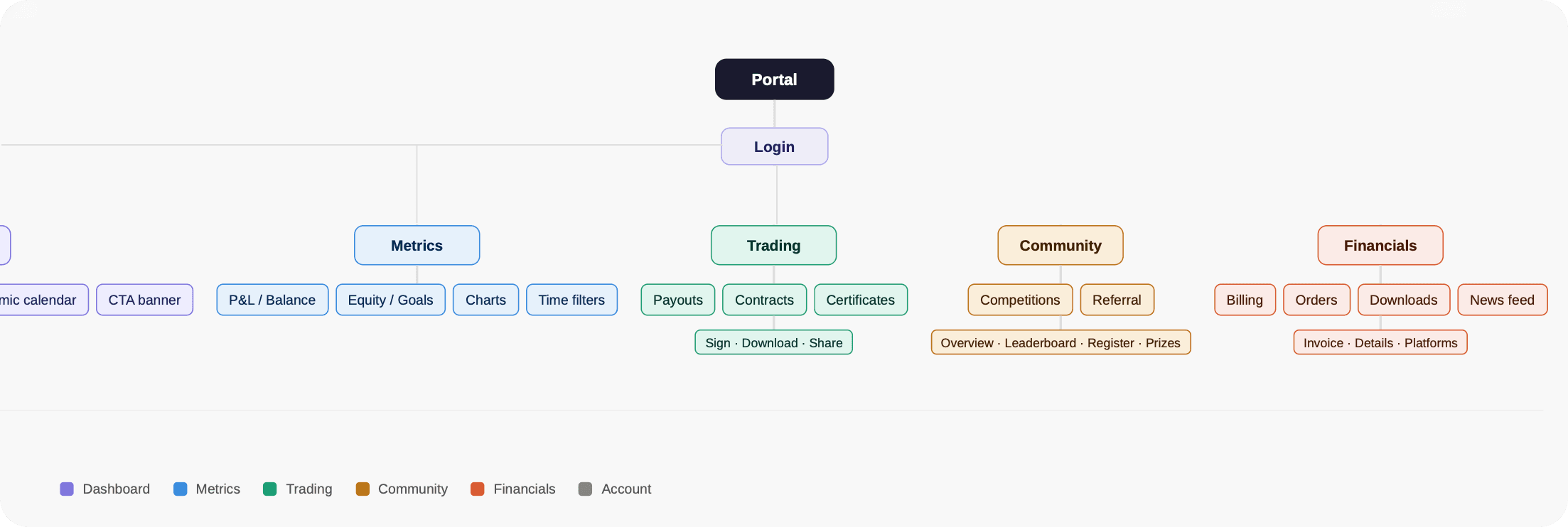
Before any portal design began, I defined a shared architecture — the navigation structure, screen hierarchy, and core flows that every designer used as a foundation. Visual language changed per brand; the underlying structure stayed consistent.
Phase 3: Full Portal Design
After concept approval, the assigned designer built out the full portal:
Complete design system — colour tokens, typography, components, states
All portal screens — 30–40 screens including dashboard, trading statistic, account management, profile.
Mobile adaptation — responsive design for all screens
Payment pages — separate deliverable, critical for conversion, designed with speed and trust in mind
Developer handoff preparation — annotated Figma file with specs and interaction notes
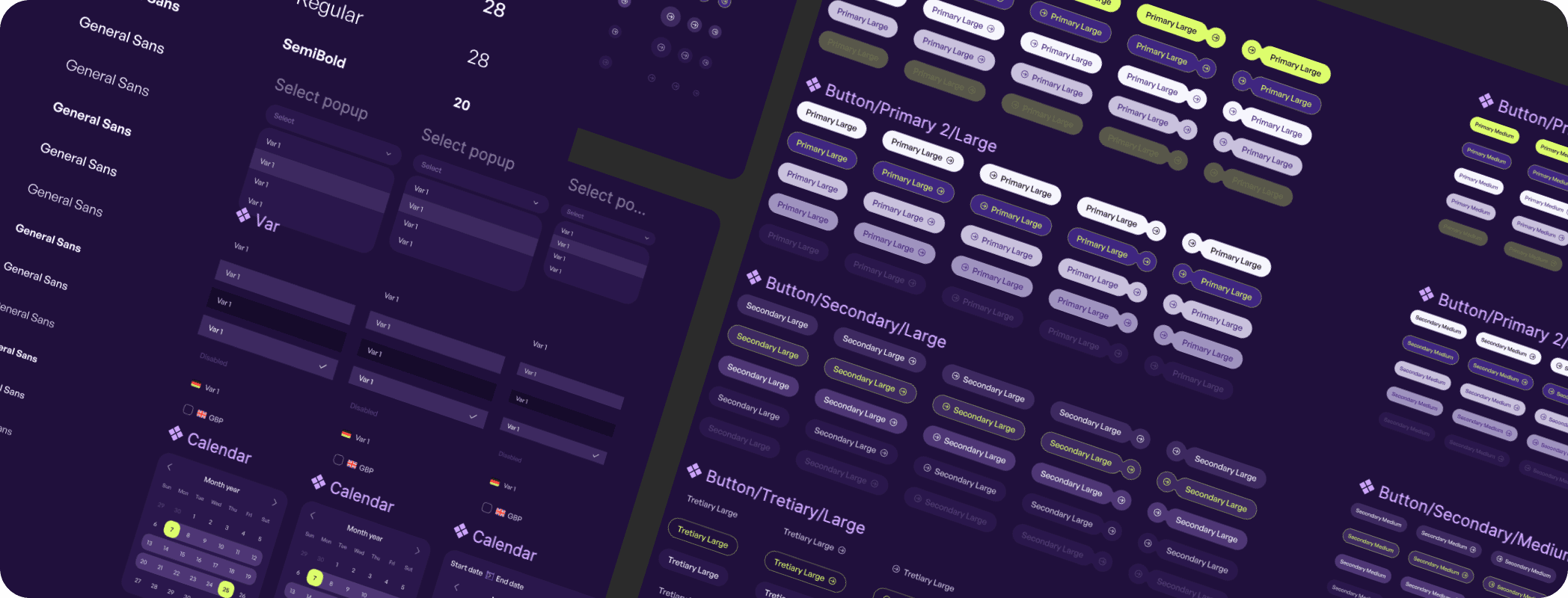
variant 1
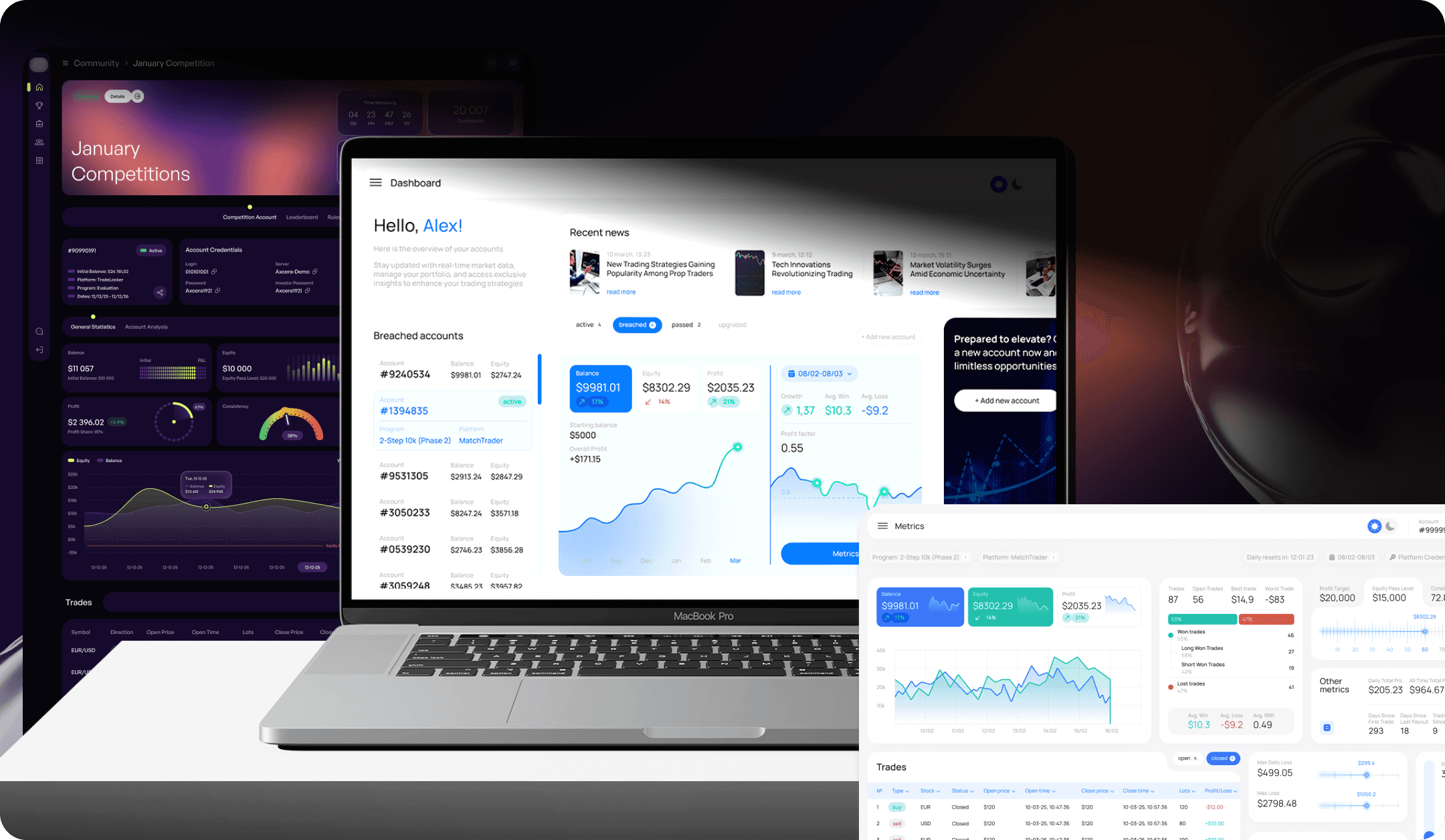
Proprietary prop trading portal — dark purple with neon accents, data-rich trading dashboard. Designed for professional prop firm clients. Key decision: dense metrics layout that surfaces all critical data without navigation — traders never leave the main screen.
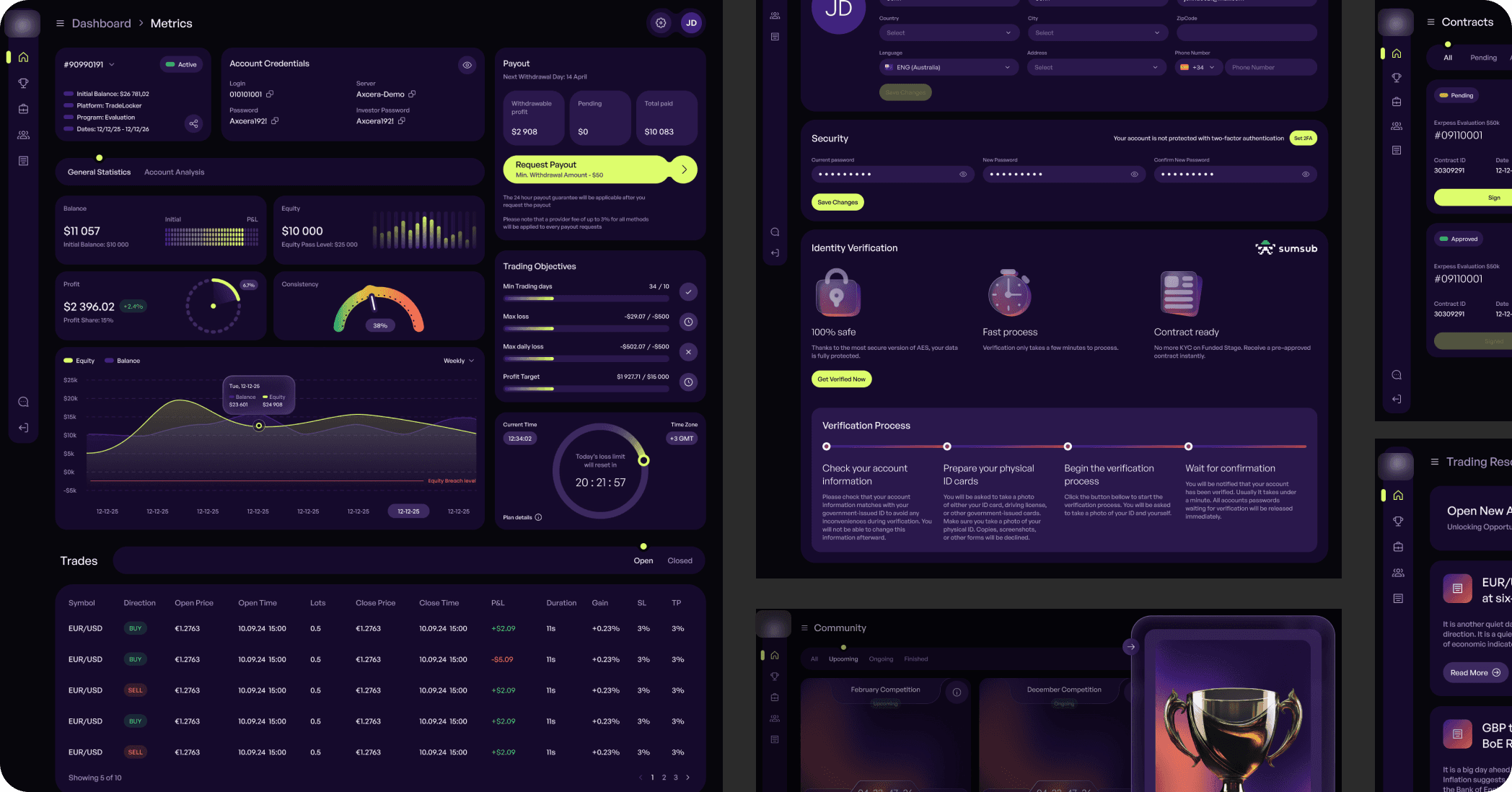
Built from scratch — 200+ components, dark purple + neon green direction. Unique element: custom data visualisation components built specifically for prop trading metrics — progress gauges, P&L charts, trade tables.
variant 2
Clean corporate portal — light blue with teal accents, professional and accessible. Designed for retail traders entering prop trading for the first time. Key decision: personalised dashboard greeting ("Hello, Alex!") and account cards with inline metrics — reduces time to locate the right account across multiple active challenges.
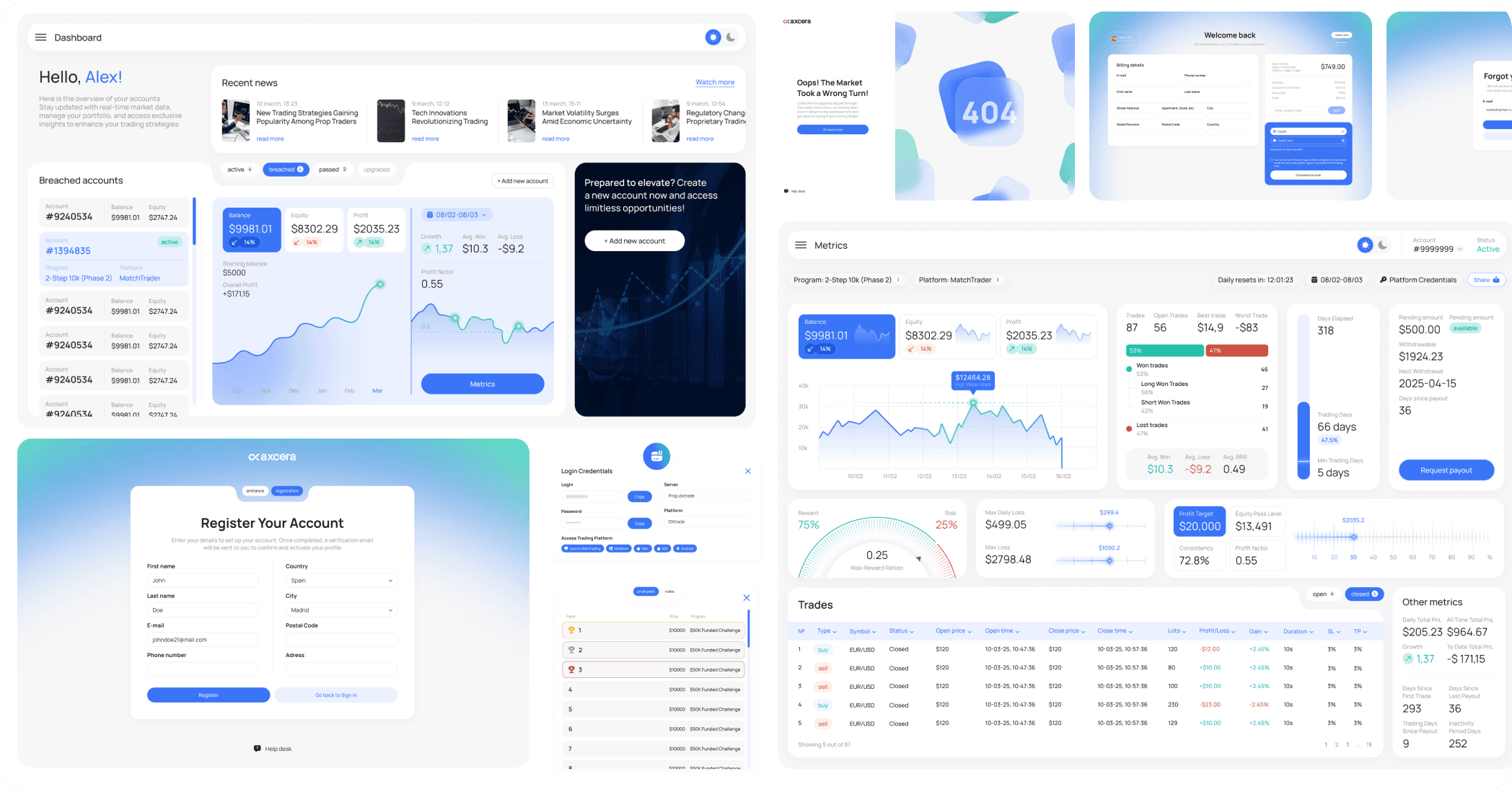
Built from scratch in 1 month alongside full portal delivery — light theme, blue + teal direction. Includes full mobile adaptation across all key screens.
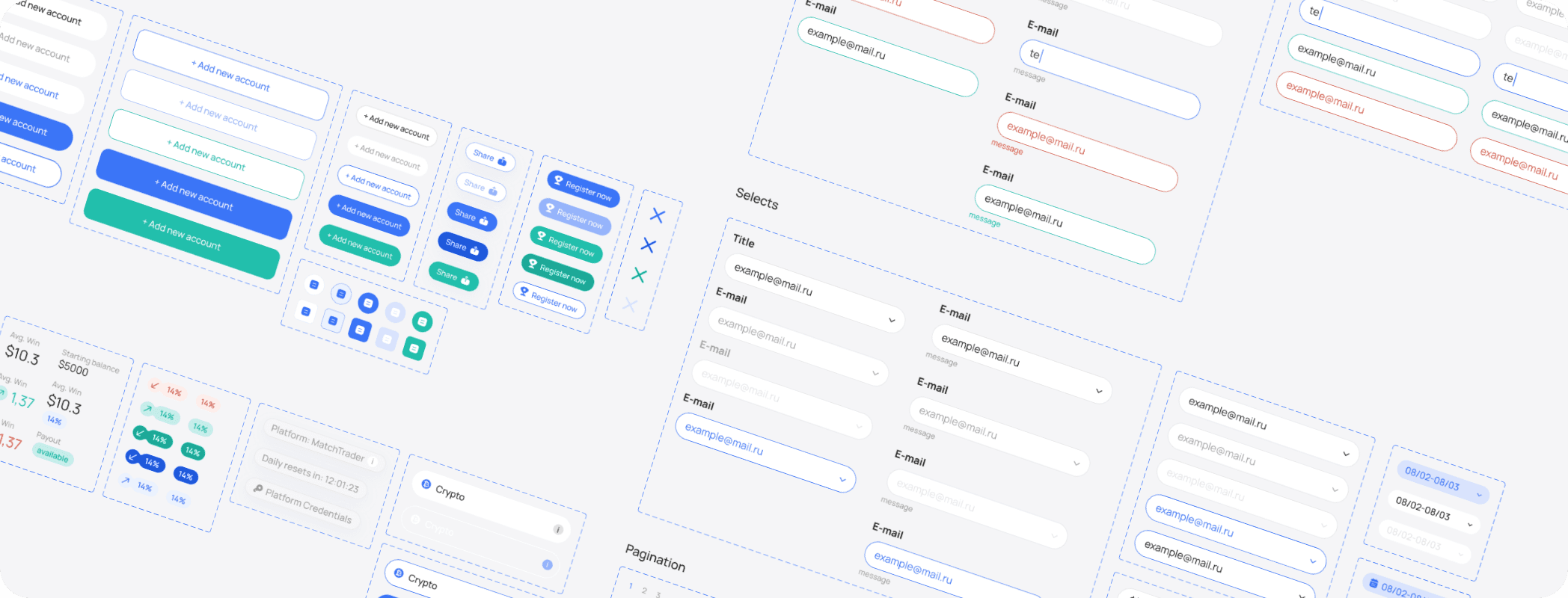
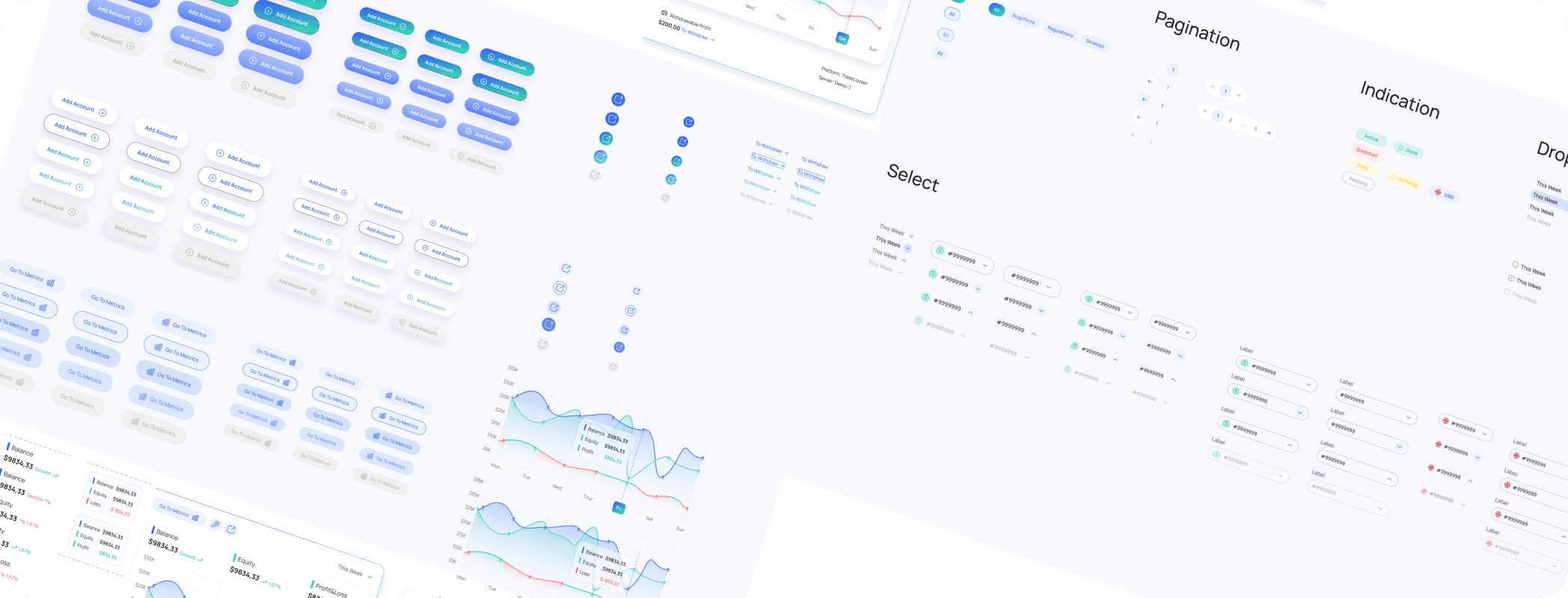
variant 3
Light minimal portal — white base with blue-teal gradient accents, soft and modern. Designed for beginner-to-intermediate prop traders. Key decision: competition cards with live countdown timers front and center — turns a feature into a visual hook that drives account creation.
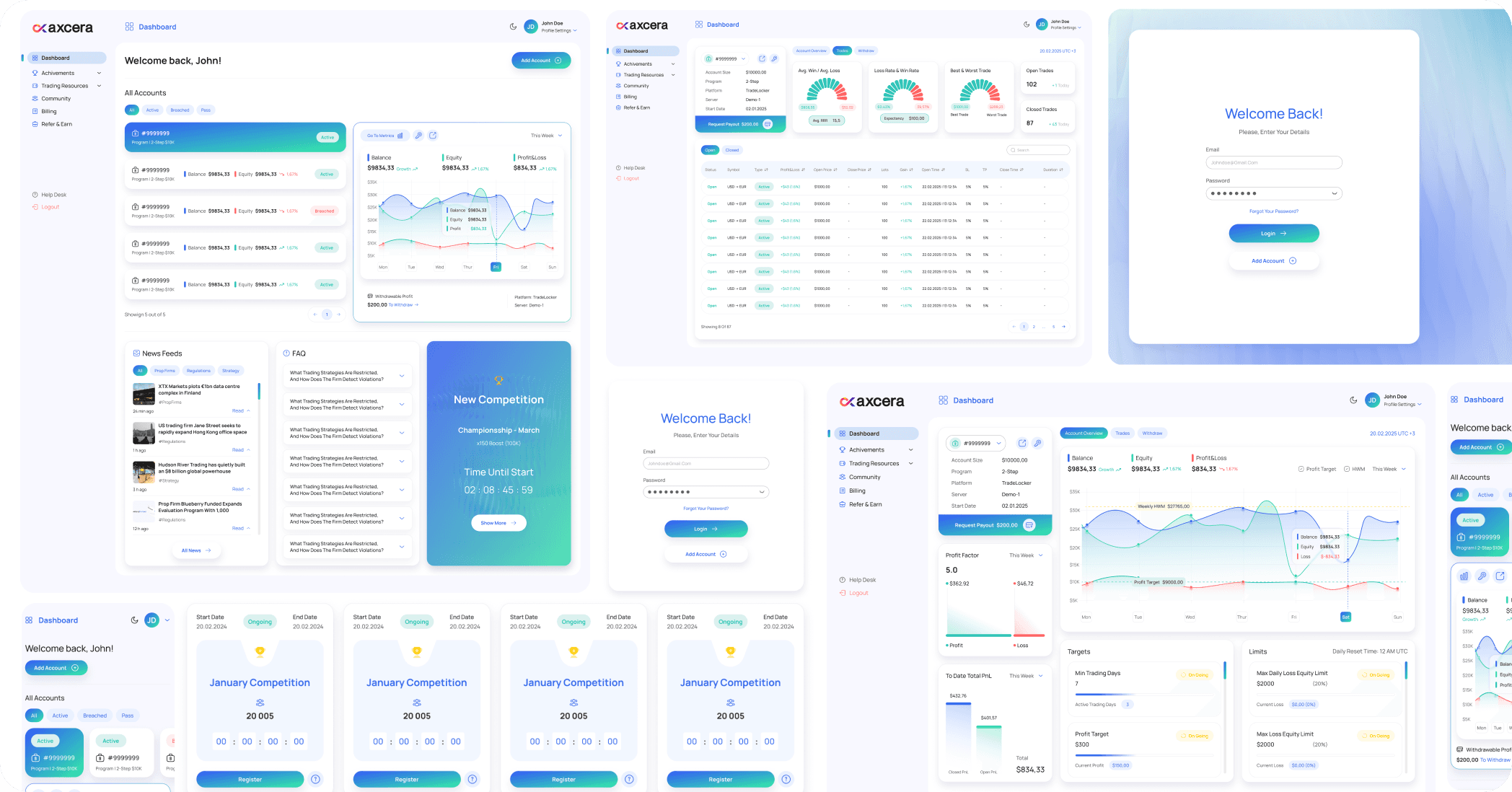
Built from scratch — light theme, blue + teal + gradient direction. Notable for extensive chart component library: multiple graph types, account cards, and status indicators all systematised for reuse across dashboard and metrics.
variant 4
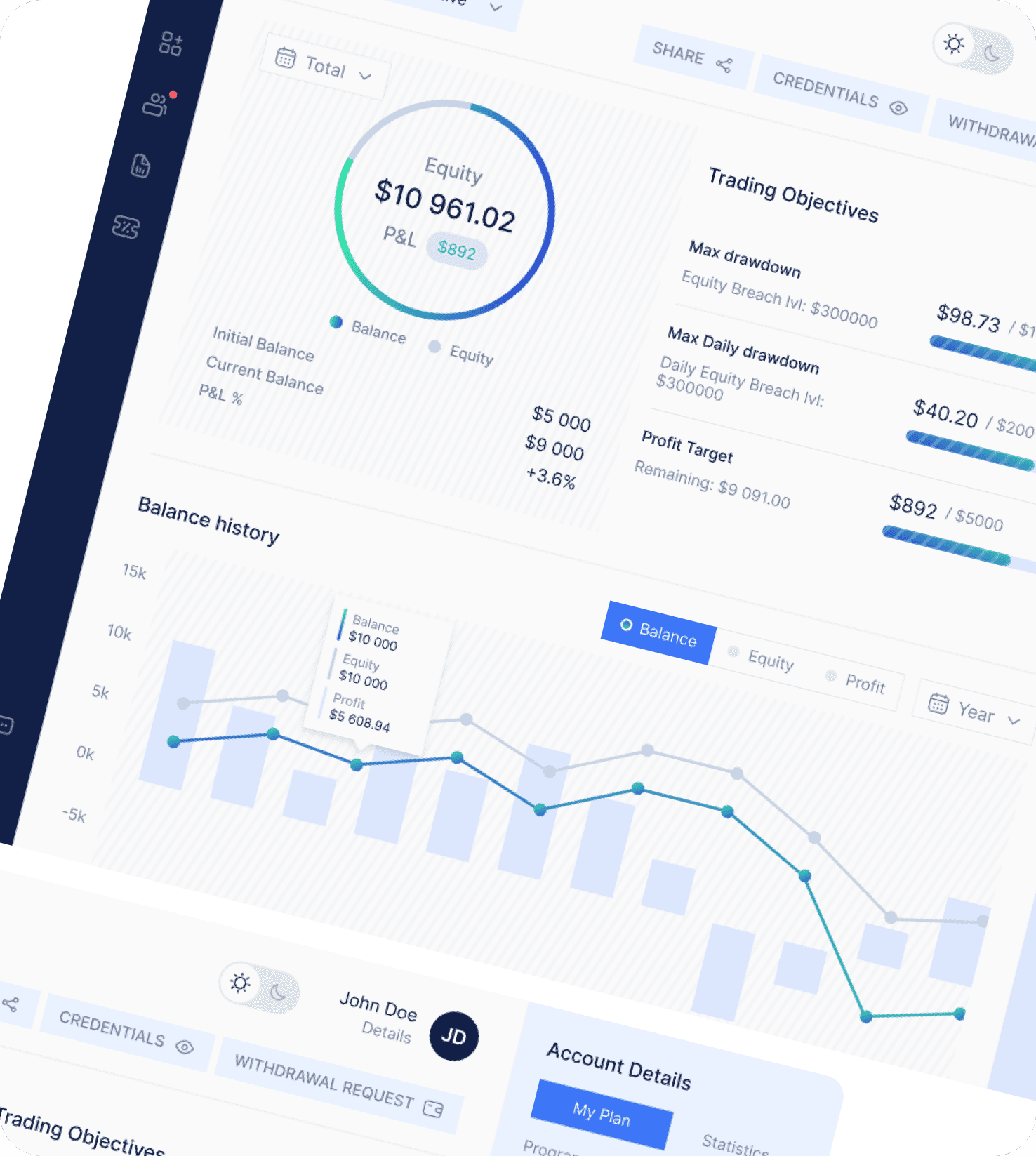
Flat corporate portal — white with navy sidebar and teal accents, intentionally restrained. Designed for experienced traders who prioritise data clarity over visual flair. A deliberate departure from gradient-heavy trends — flat design was the brief, chosen to maximise readability and signal professionalism.
variant 5
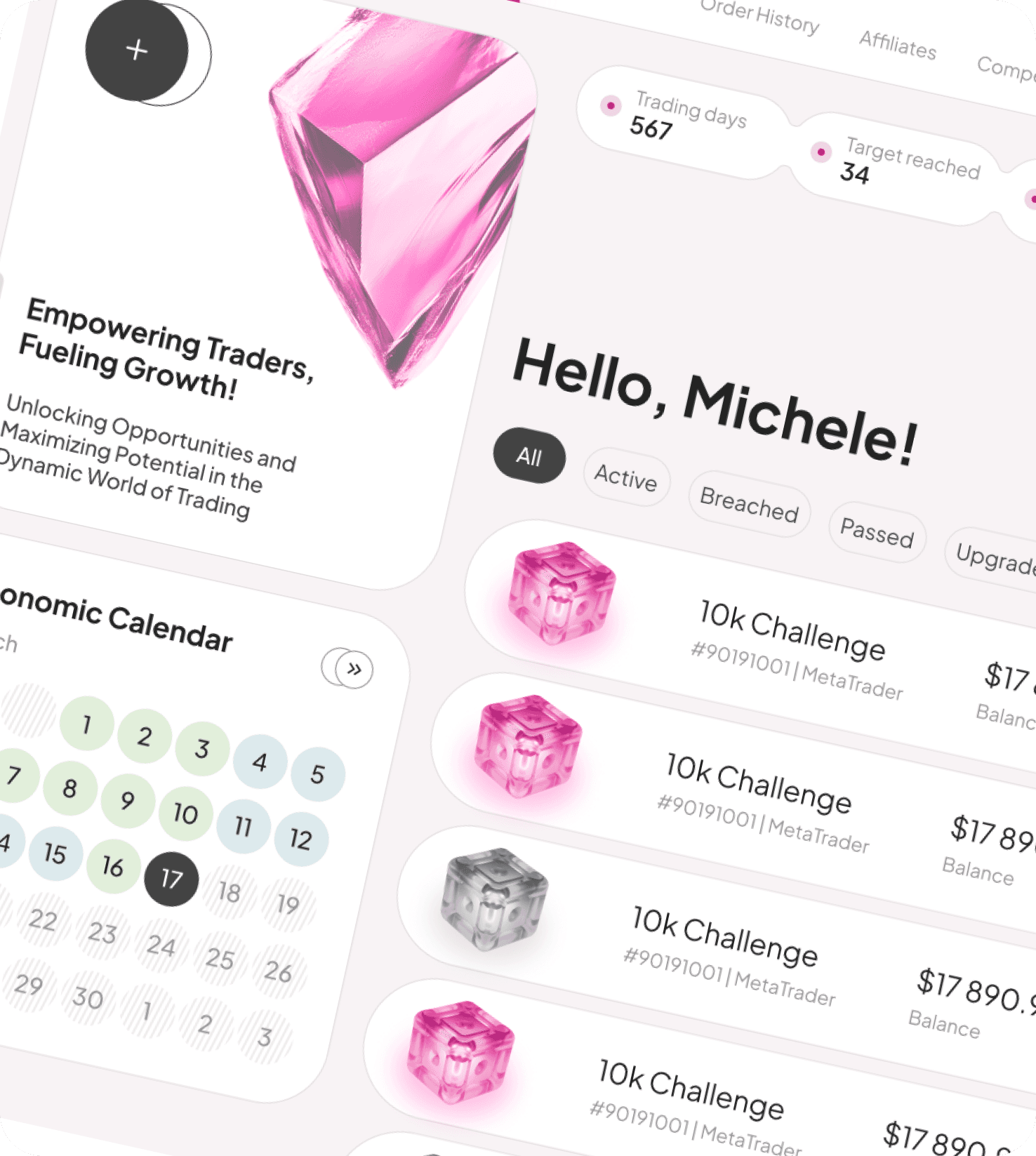
Editorial gaming portal — white with bold pink, 3D crystal assets as account identifiers. Designed for a younger trader audience where brand personality matters as much as functionality. Key decision: each trading account gets a unique 3D gem — turns an account list into a visual collection, making the product feel more like a game than a financial tool.
Portal Designs
Trading Analytics Page
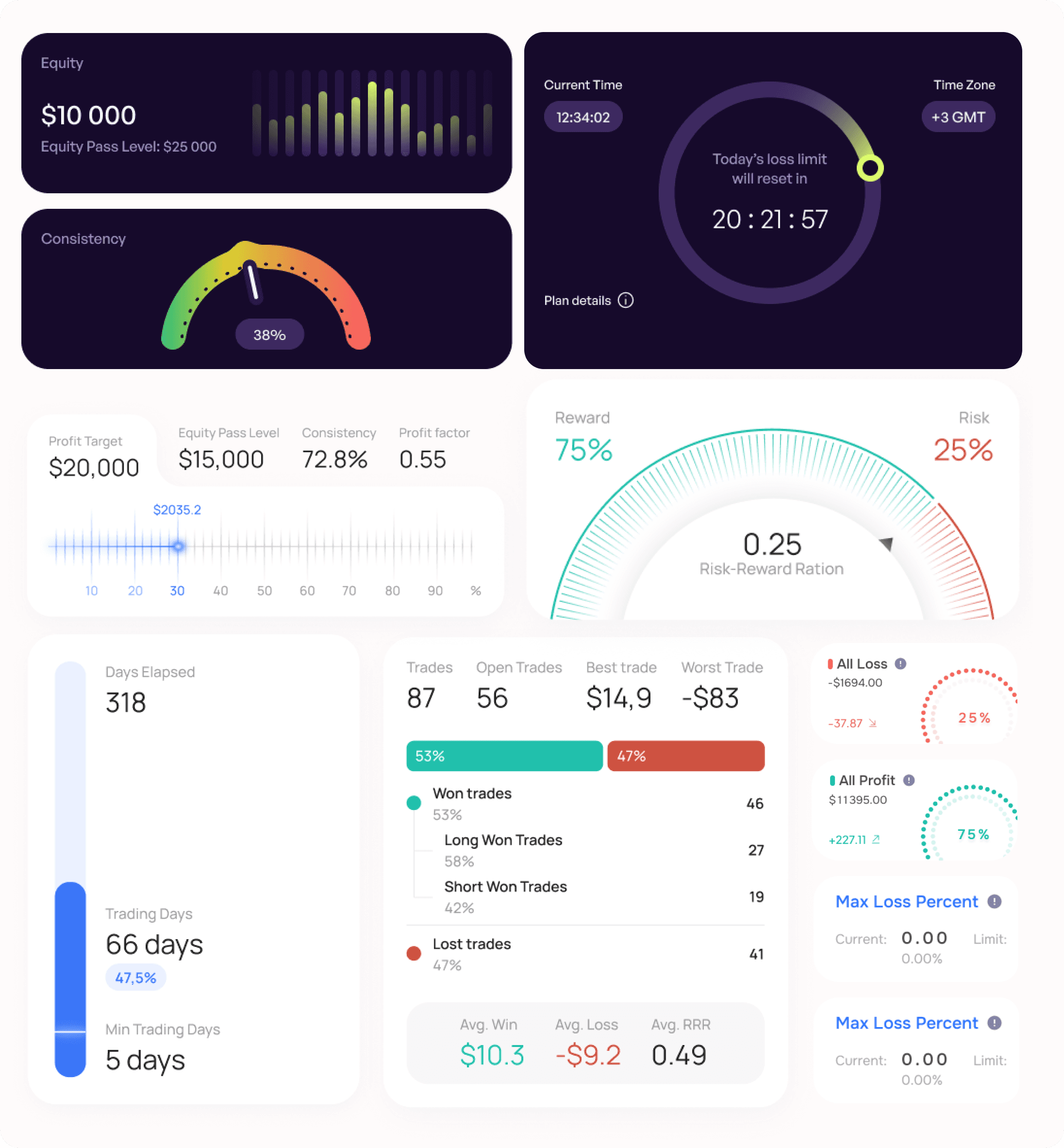
The analytics page was the most technically and visually complex deliverable in every portal. Traders spent more time here than anywhere else — it had to be both beautiful and functional.
We designed custom data visualization elements from scratch — equity charts, trading calendars, performance health bars, and statistical breakdowns. None of these existed in standard libraries. Every element was researched, designed, and validated with developers before implementation — because custom visualizations at this level require close collaboration to build at all.
This page became a selling point. Brokers used it in their own sales pitches to traders.
Stage 4:
Maintaining Quality at Scale
The hardest part of scaling wasn’t hiring — it was keeping quality consistent when 13 designers were working in parallel on different briefs under tight deadlines
Quality Control System
Every portal reviewed by me before client delivery —
no exceptions
Team review calls caught issues early — before they reached final stage
Written quality checklist — designers self-reviewed before submitting for final check
Design system audit — each system checked for completeness and consistency
Leading Under Pressure
Tight deadlines and frequent direction changes created constant tension between speed and quality. My role was to absorb that pressure before it reached the team:
Shielded designers from upstream instability — direction changes handled at concept stage, not mid-delivery
Kept motivation high by making the work feel purposeful, not just urgent
When pressure hit, I took it — the team focused on craft, I managed the chaos
Speed and quality weren't traded off — they were managed through structure, not heroics
Results & Impact
7 months → 2 weeks
Time to deliver first portal: CTO alone took 7 months. With the team: concept to approval in ~2 weeks, full portal in 1 month.
1 → 13 designers
Built the entire design team from scratch. All 13 designers hired, onboarded, and trained by me within 6 months of team formation.
4 portals / month
Average delivery rate once the team reached full capacity. Peak: 6–7 portals in a single month.
30–40 screens per portal
Each portal included full design system, desktop + mobile adaptation, and payment pages. Unique visual language per brand.
10–15 B2B clients / month
Client acquisition scaled directly with design output — more portals delivered, more contracts signed.
100% sell-through
Design quality was the differentiator. Every portal sold — no unsold inventory, no wasted work.
Did we achieve what we set out to do?
What I Left Behind
Delivery velocity — scaled from 0 to 4+ portals/month, peak 6–7
Portal sell-through — 100%, every portal sold to a broker client
Quality consistency — maintained across 13 designers via review process
Team built — 13 designers hired, onboarded, and productive
Business growth — design became the primary revenue driver, 10–15 clients/month
After 11 months, the design function was fully operational — team, process, and product all running independently. What started as one person figuring things out alone became a structured team delivering 4+ portals a month with consistent quality.
The processes, documentation, and standards I built continued to run after I left. The team I hired and trained kept delivering.

Some details are protected by NDA and not included here. If you'd like to learn more about the full process, challenges, and results — feel free to reach out.