KYC & Registration: +60% Conversion Through UX Redesign
A complete redesign of KYC and registration flows across 10+ broker brands — driven by data, constrained by regulation, measured by conversion.
Product type
Trading / Fintech
Role
Lead Product Designer
Timeline
1 month design
3 month result
Platform
Web Portal + Mobile
Multi-brand
Company
IronFX

Problem & Goal
A forex company with 10+ broker brands was losing users at a critical moment: KYC verification. Without completing KYC, users couldn't trade or deposit funds — making every drop-off a direct revenue loss across the entire brand portfolio.
The problem wasn't that KYC existed — regulatory requirements meant it couldn't be removed. The problem was that the experience around it was broken: confusing, visually overwhelming, and leaving users with no understanding of what to do or why.
The task: redesign the KYC and registration experience to reduce drop-off — without removing a single required step.
User Problems
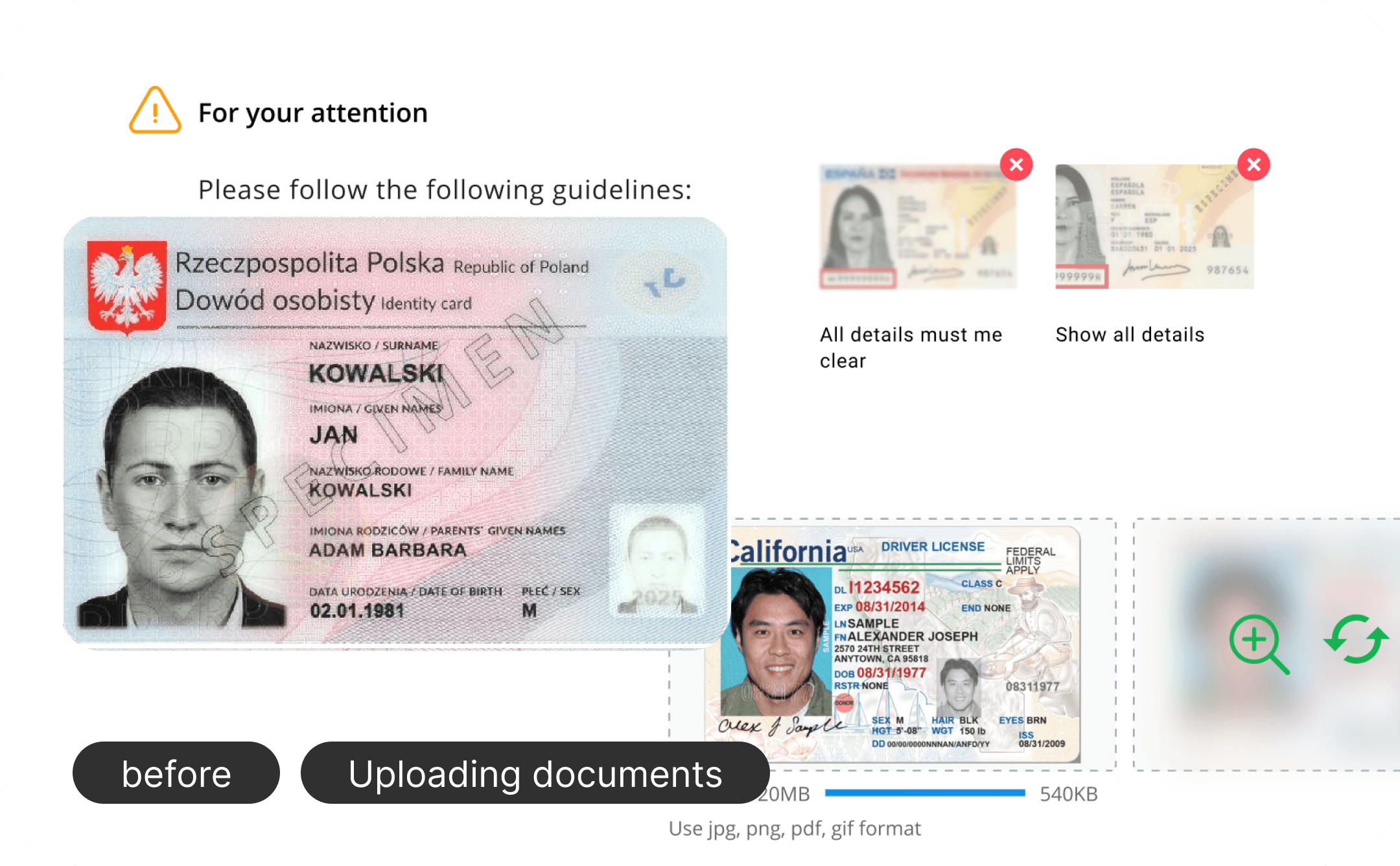
Didn’t know which documents to upload or why
No clear feedback on what was wrong when rejected
Status after submission was unclear — no communication from the system
Registration dumped all steps on one page with no guidance
Couldn’t understand why they couldn’t trade yet and need to find the page with an explanation
Business Problems
High drop-off rate during KYC = users never reaching trading
Huge manual review load from unclear document uploads
Support team overwhelmed with KYC status questions
Low registration conversion despite portal improvements
Revenue loss across 10+ brands simultaneously
Project Constraints
Regulatory: KYC steps cannot be removed — required by financial regulators across multiple countries. Every field and document request exists for compliance reasons.
Fraud prevention: Simplifying too aggressively increases fraud risk. Every change had to be reviewed with the analytics team.
Multi-brand complexity: 10+ brands, each with slightly different flows. Some brands had KYC in a popup — changing the pattern would break overall portal consistency.
Legacy design: Some brands had heavily outdated visual design. Changes had to work within existing styles without triggering a full redesign.
No prior designs: Old KYC screens were not available. Required reconstructing the baseline from memory and video sessions.
Timeline: 1 month to design and launch. No A/B testing — direct rollout starting with highest-revenue brands.
Mobile-first was not the existing approach: 83% of new users came via mobile, but the portal was designed desktop-first. Advocating for mobile-first required data-backed justification.
My Role
Joined the company as the first designer focused on this problem. Owned the full redesign from discovery through launch across all brands.
UX & UI ownership
End-to-end redesign across registration, KYC flow, statuses, and document upload. Adapted for 10+ brands.
Mobile-first initiative
Identified that 83% of new users came via mobile. Advocated and implemented mobile-first approach with analytics support.
Data & research
Video sessions, heatmaps, support tickets. Worked with analyst — jointly owned data and hypothesis validation.
Security discovery
Identified document visibility issue mid-project. Flagged, scoped, and designed the fix as part of the same release.
How We Defined Success
This was a conversion and compliance project — success was measurable from day one:
Auto-approval rate — more users passing KYC without manual review = less cost, faster activation
Registration conversion rate — % of users completing registration and reaching the portal
SUS score after usability testing — do users find the product easy enough to replace what we have?
Manual review volume — reduction in secondary review load as a signal of clearer document guidance
Support ticket volume — reduction in KYC-related tickets as a signal of clearer status communication
Session time post-registration — users spending more time in portal after KYC = higher engagement
KYC initiation rate — % of registered users who actually start KYC, tracked via dashboard prompt and profile visibility improvements
Design Workflow
Research came first — no assumptions. Every design decision was tied to a specific observed behaviour or data point.
Stage 1: Discovery & Research
Funnel data, support ticket patterns, competitive research — in close collaboration with a dedicated analyst.
Stage 2: Problem Definition
Mapped all friction points: unclear statuses, doc visibility issues, registration flow, KYC steps. Prioritised by business impact.
Stage 3: User Flows
Mapped flows per brand — some steps differed across brands. Mobile-first approach driven by 83% mobile entry data.
Stage 4: Design & Iteration
Redesigned registration, KYC steps, statuses, and document upload. Multiple iterations per component. No A/B — direct launch.
Stage 5: Launch & Measurement
Rolled out starting with highest-revenue brands. Measured auto-approval rate, registration conversion, support tickets.
Stage 6: Security & Edge Cases
Removed document visibility from user profile. Redesigned status communication. Addressed secondary issues discovered mid-project.
Stage 1:
Discovery & Research
Research was collaborative — the analytics team provided funnel data and behavioural metrics that defined the starting point.
I requested and interpreted the data, identified patterns, and ran competitive research to find best-in-class solutions.
What the Data Showed
Drop-off concentrated at two points: document upload step and post-submission (users had no idea what happened next)
Drop-off concentrated at two points: document upload step and post-submission (users had no idea what happened next)
83% of new registrations came via mobile — but the portal was designed desktop-first
Support tickets clustered around three questions: 'did you receive my documents?', 'why was I rejected?', 'what do I do now?'
Document type analysis across 6 key markets revealed which ID types had the highest auto-approval rates per country. For example: driver's licence performed best in the UK, national ID in France. This data was used to add "(Recommended)" labels to the highest-performing document option per market — directly reducing wrong submissions.
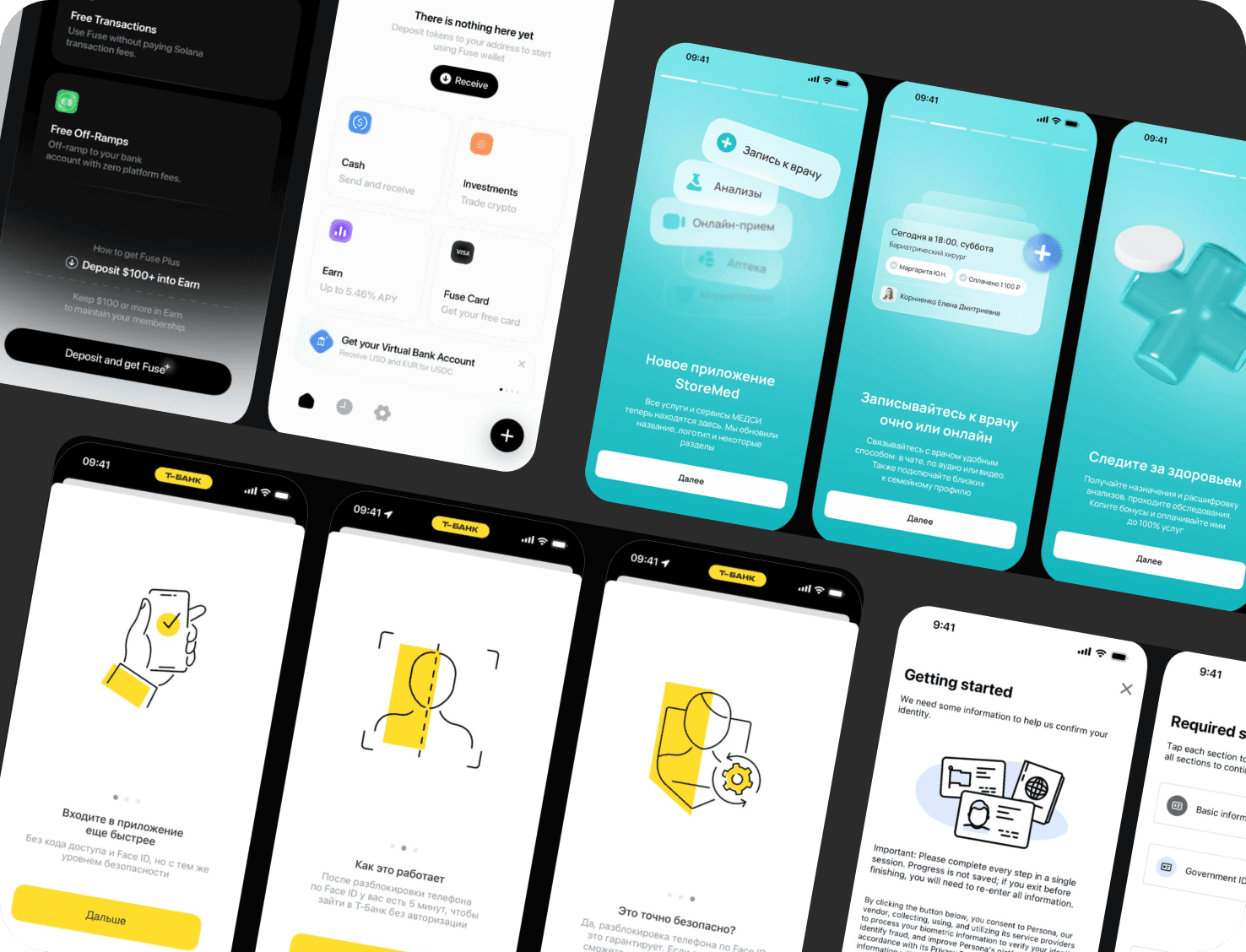
Competitive Research — KYC Best Practices
Reviewed KYC flows across: Gosuslugi (benchmark for document upload illustration — shows exactly what an acceptable photo looks like), Revolut, AvaTrade, NAGA.
Key Insights
Step-by-step structure with visible progress reduces abandonment — users need to know how long the process is
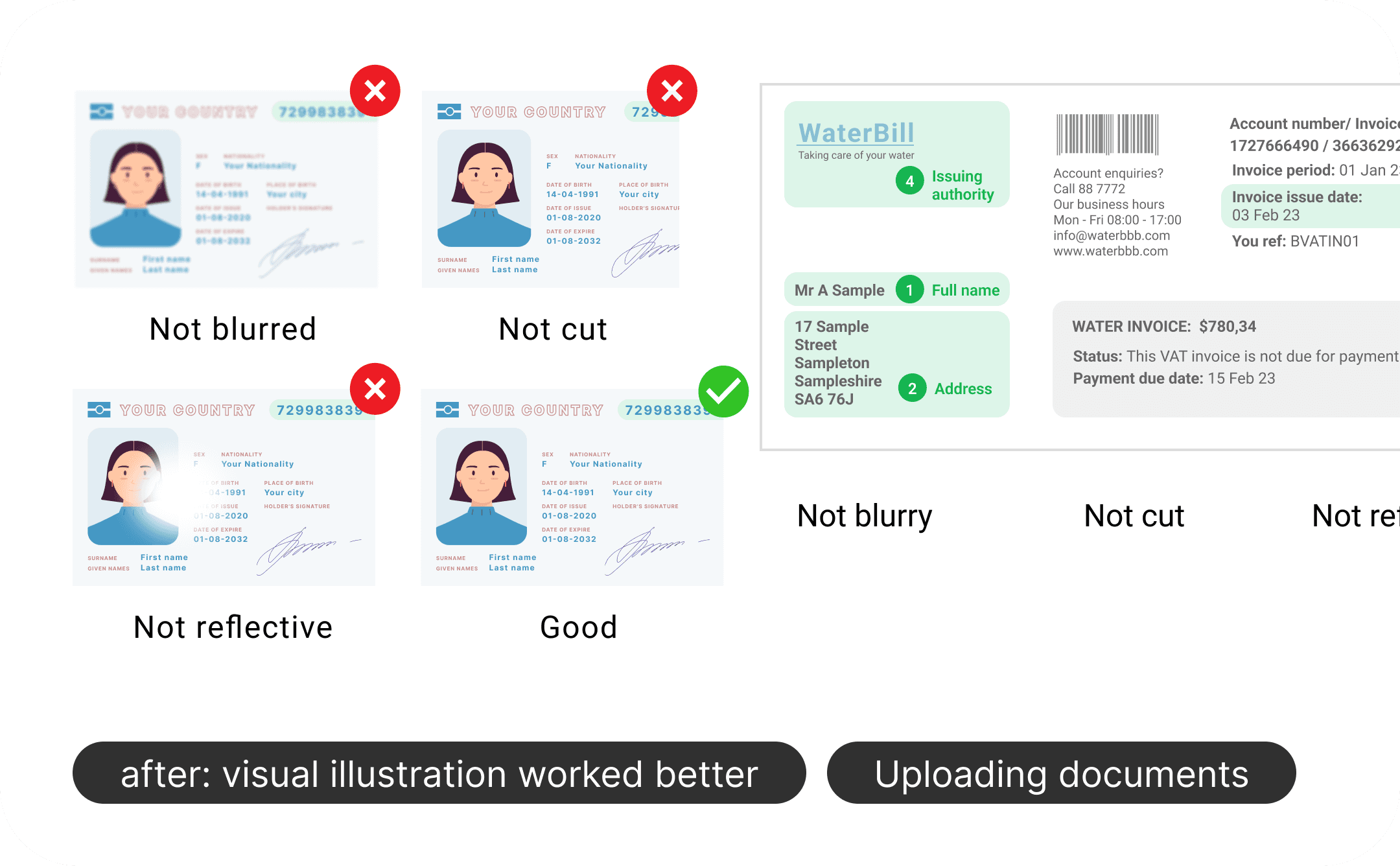
Visual document examples (Gosuslugi approach) dramatically reduce wrong submissions — showing angle, lighting, no blur
Status communication after submission is table stakes — every strong KYC flow has clear pending/approved/rejected states
Mobile-first document upload is critical — most users photograph documents on their phone
Error messages must be actionable — not 'rejected' but 'this is blurry, please retake'
What the Research Revealed
Two findings that shaped the project beyond the original brief:
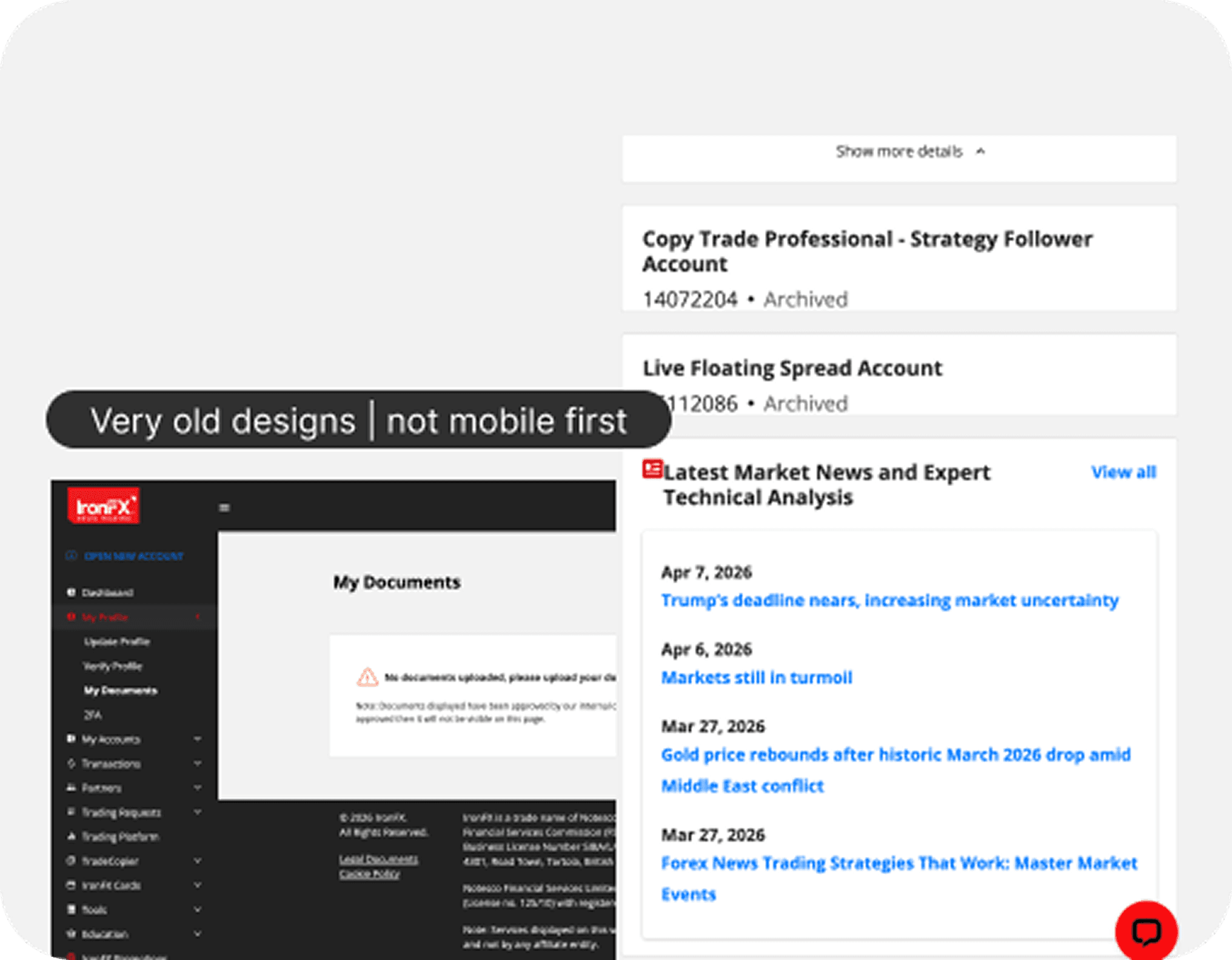
Mobile-first gap
83% of new registrations came from mobile — but the portal was designed desktop-first. Mobile was an afterthought. I made the case to the analytics team and PM to flip the approach: design mobile-first, adapt to desktop. This became a foundational decision that shaped every subsequent design choice.
Security gap
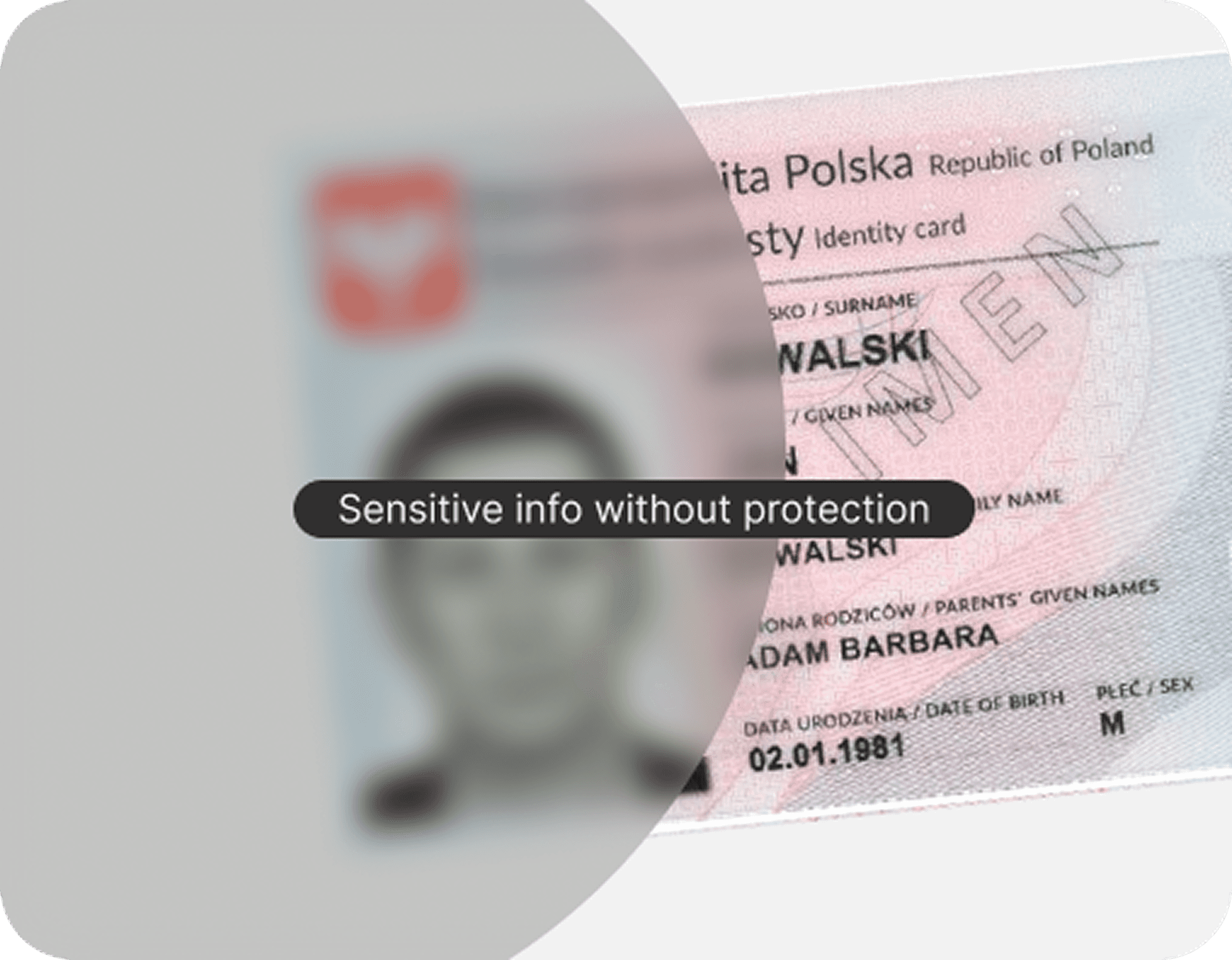
During a design review call, the team realised uploaded identity documents were visible and downloadable from the user's profile. Anyone who gained access to an account could download personal documents. Not in the original scope — but added to the release immediately.
Stage 2:
Problem Definition & Prioritisation
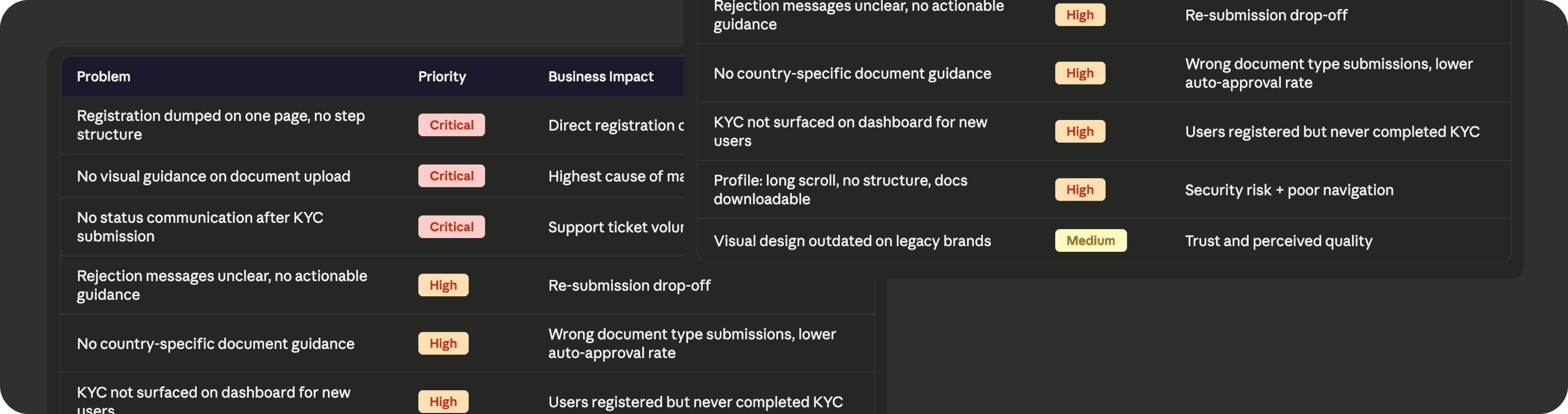
After research, all identified problems were mapped and prioritised by business impact and fix complexity:
Problems were prioritised across two axes: business impact (direct revenue or conversion effect) and fix complexity (what could ship within the 1-month timeline). Critical issues had both high impact and were achievable within scope.
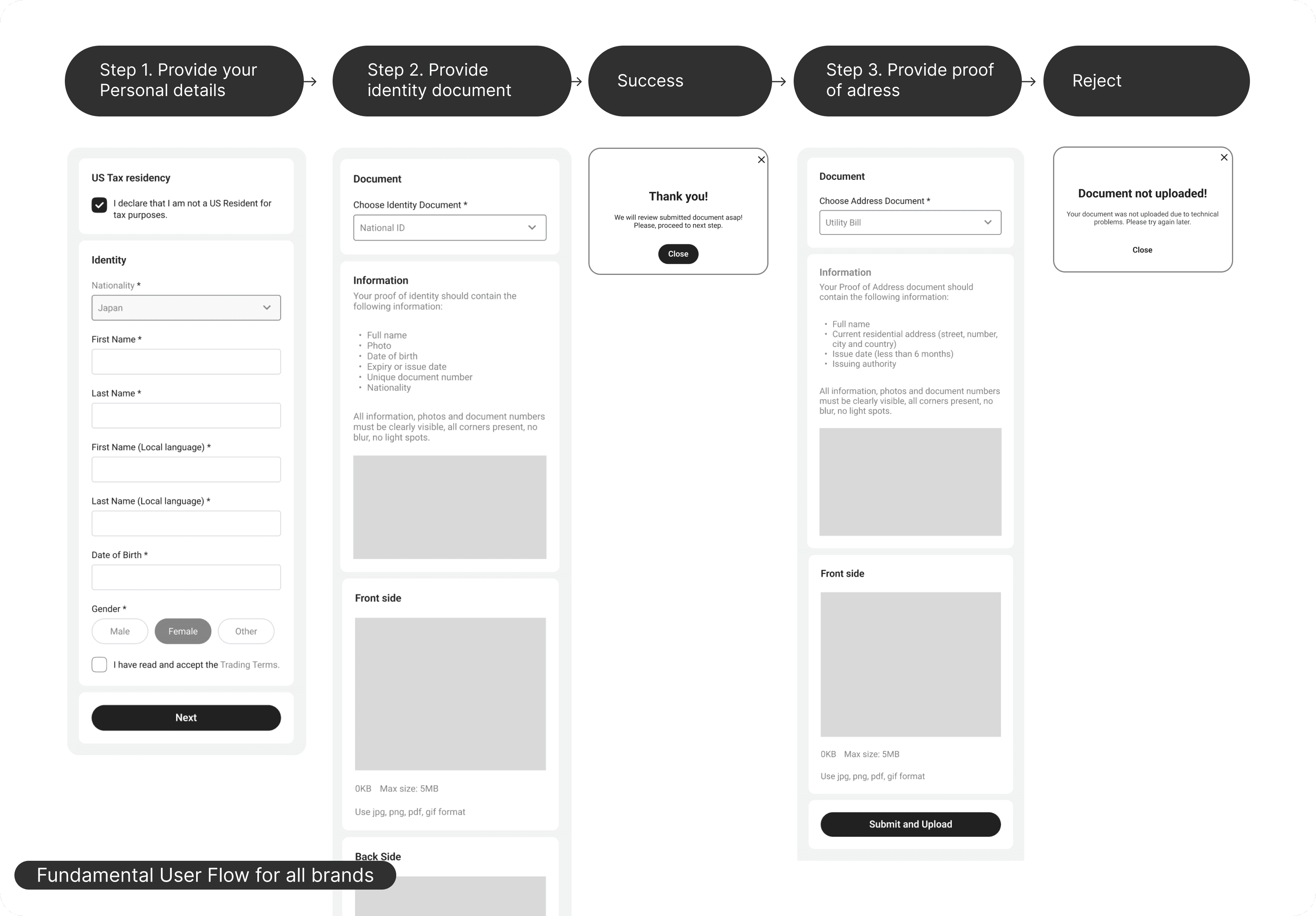
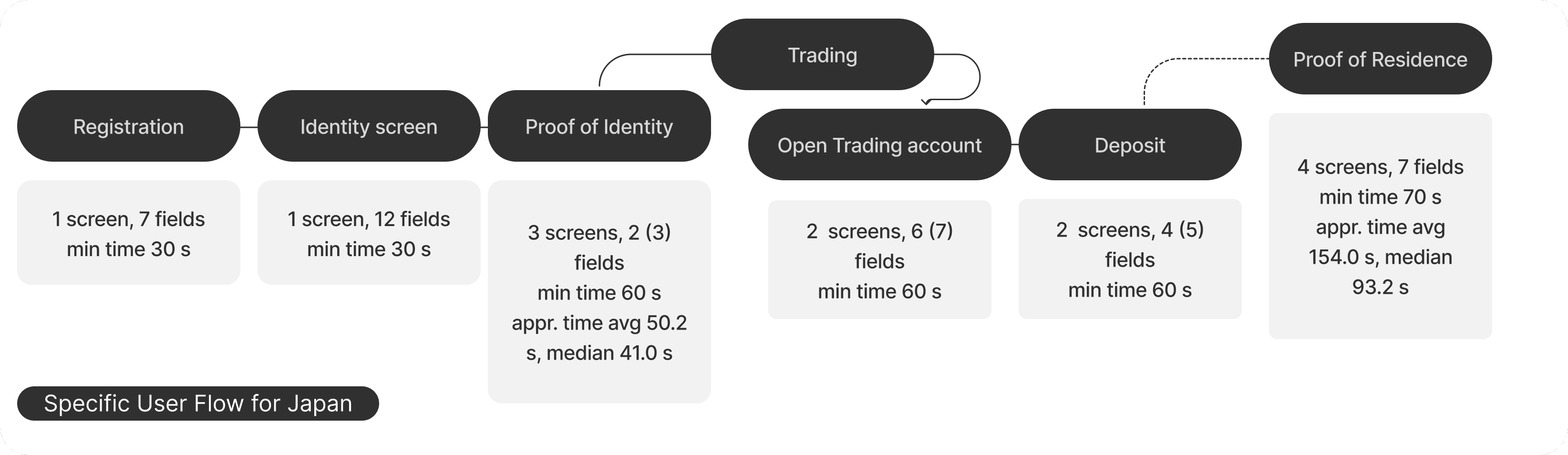
Stage 3: User Flows
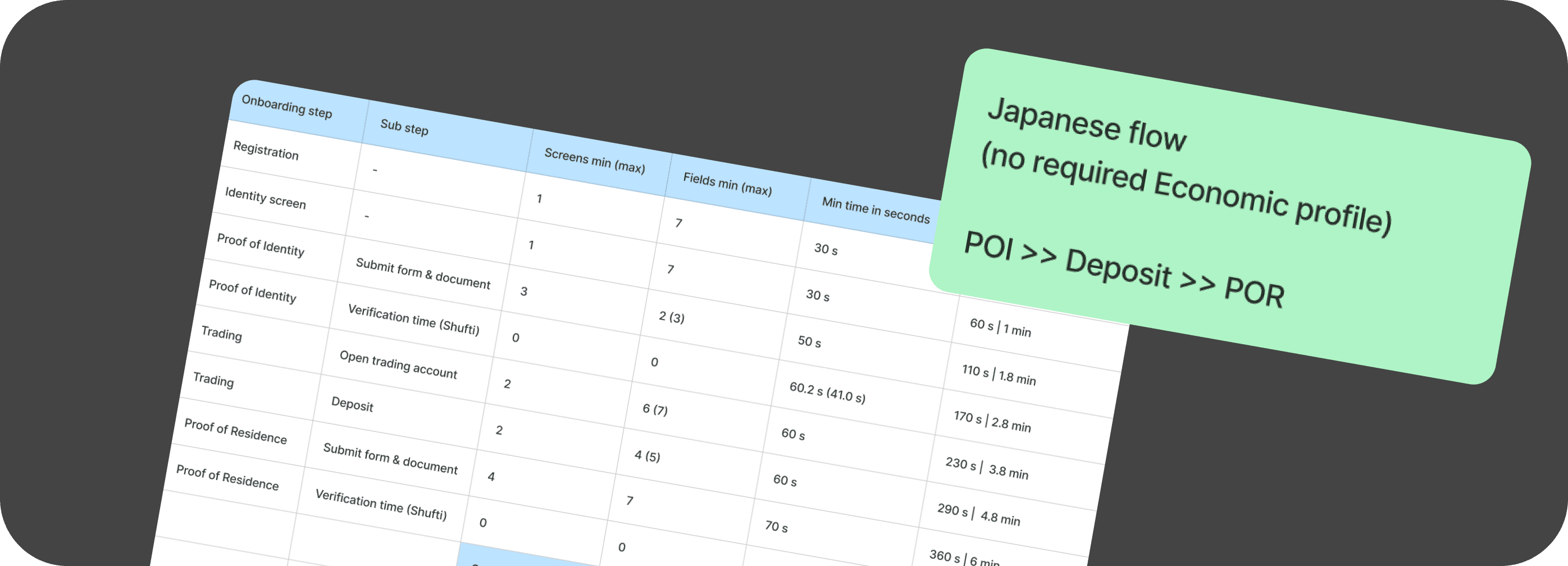
The core KYC logic is consistent across brands. Implementation varies per brand depending on design constraints and regulatory requirements.
Below is the primary flow used across the majority of brands.
Stage 4:
Design & Iteration
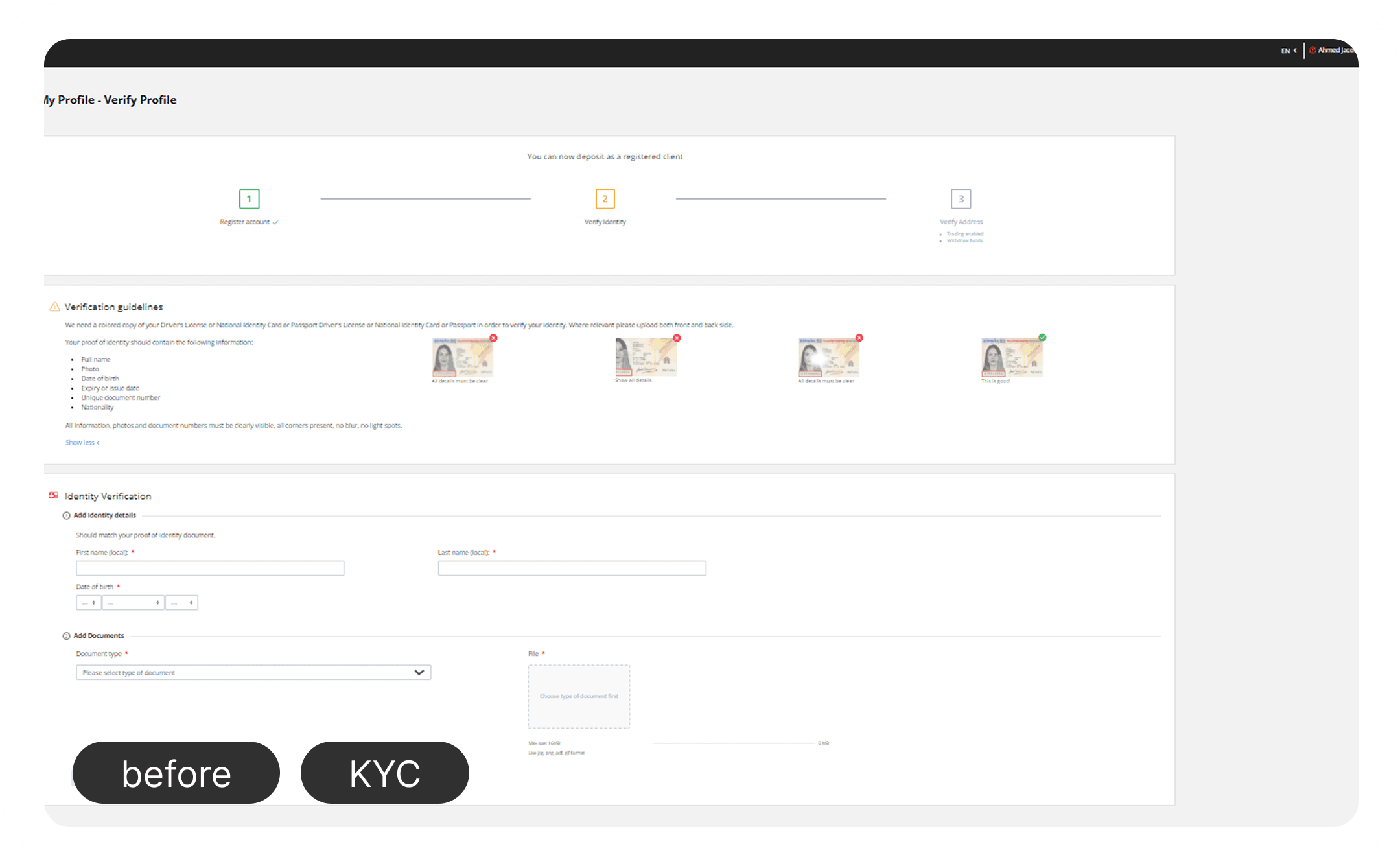
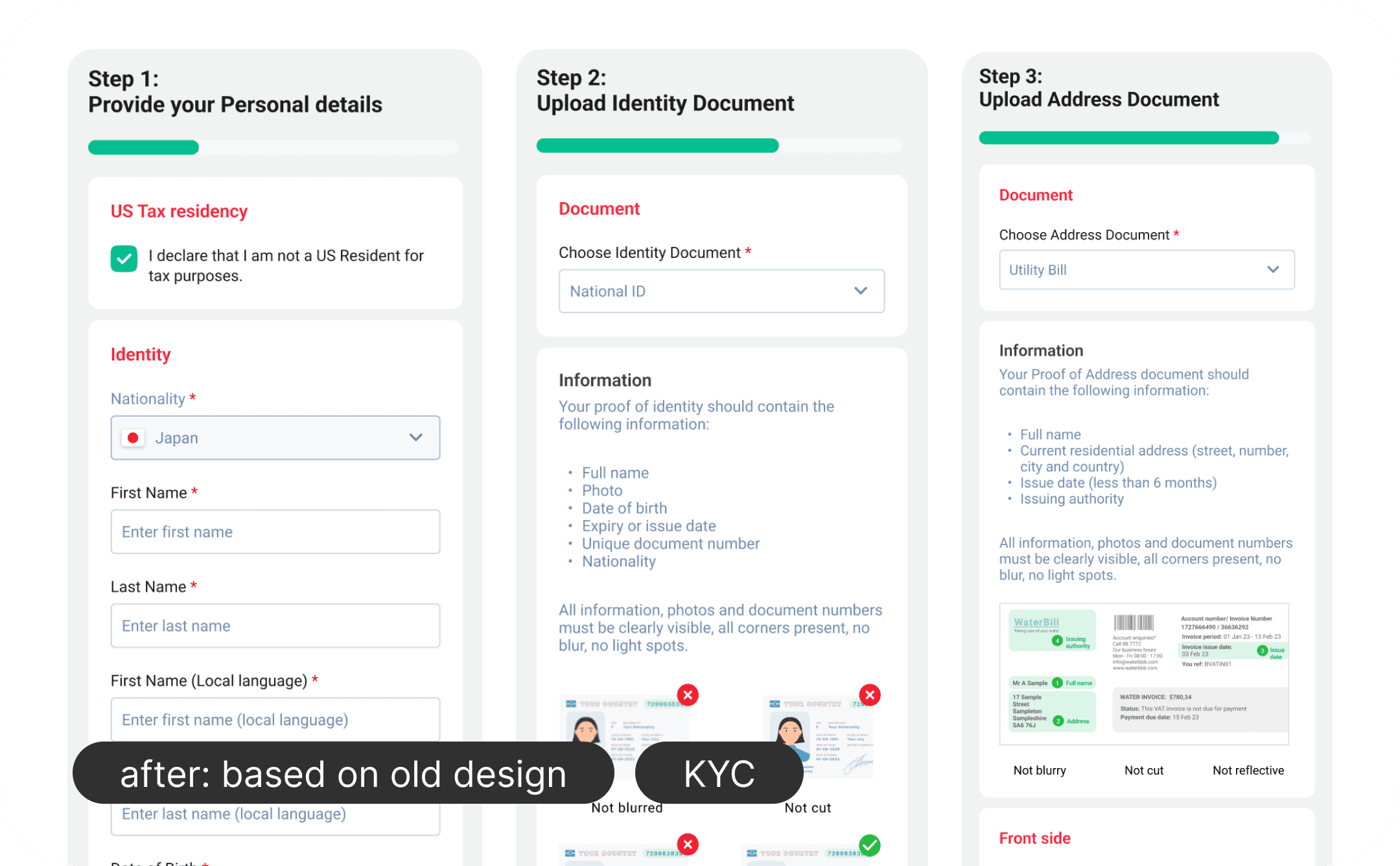
Each problem identified in research got a targeted design solution. Below — key areas redesigned, shown as before/after where possible.
KYC Design
Variant A — Step-by-step with progress indicator
KYC Design
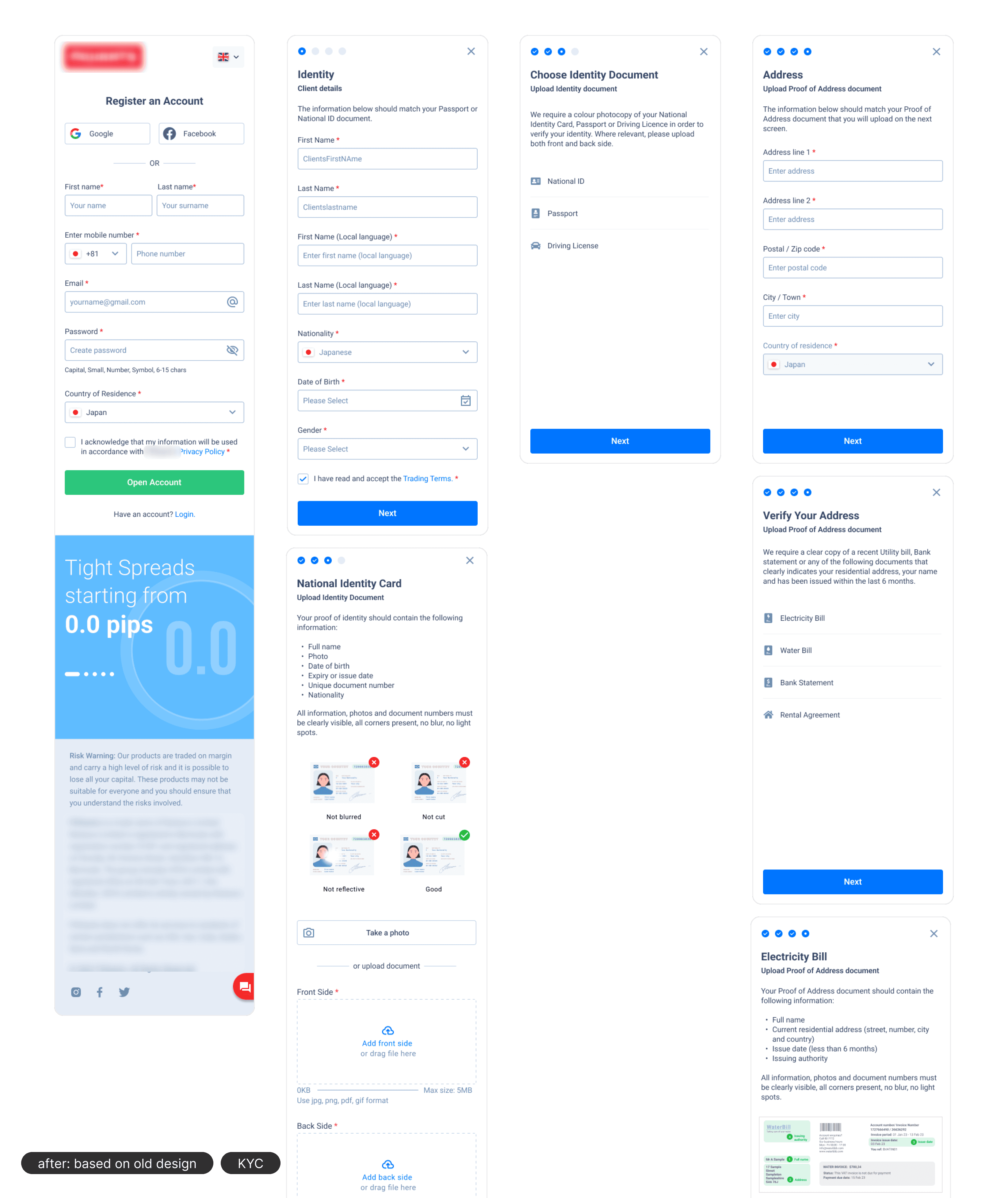
Variant B — Linear flow
Key Insights
Visual examples of acceptable documents added — inspired by Gosuslugi’s approach, drawn from scratch
Real-time upload feedback: clear visual states for accepted, processing, rejected
Error messages rewritten to be actionable: not ‘document rejected’ but ‘this photo is blurry — please retake in better lighting’
Step indicator added — users can see exactly where they are in the KYC process
"(Recommended)" label added to the highest auto-approval document type per country — based on approval rate analysis across 6 markets
Beyond KYC Designs
Changes that followed from the KYC redesign — profile, dashboard, and status communication.
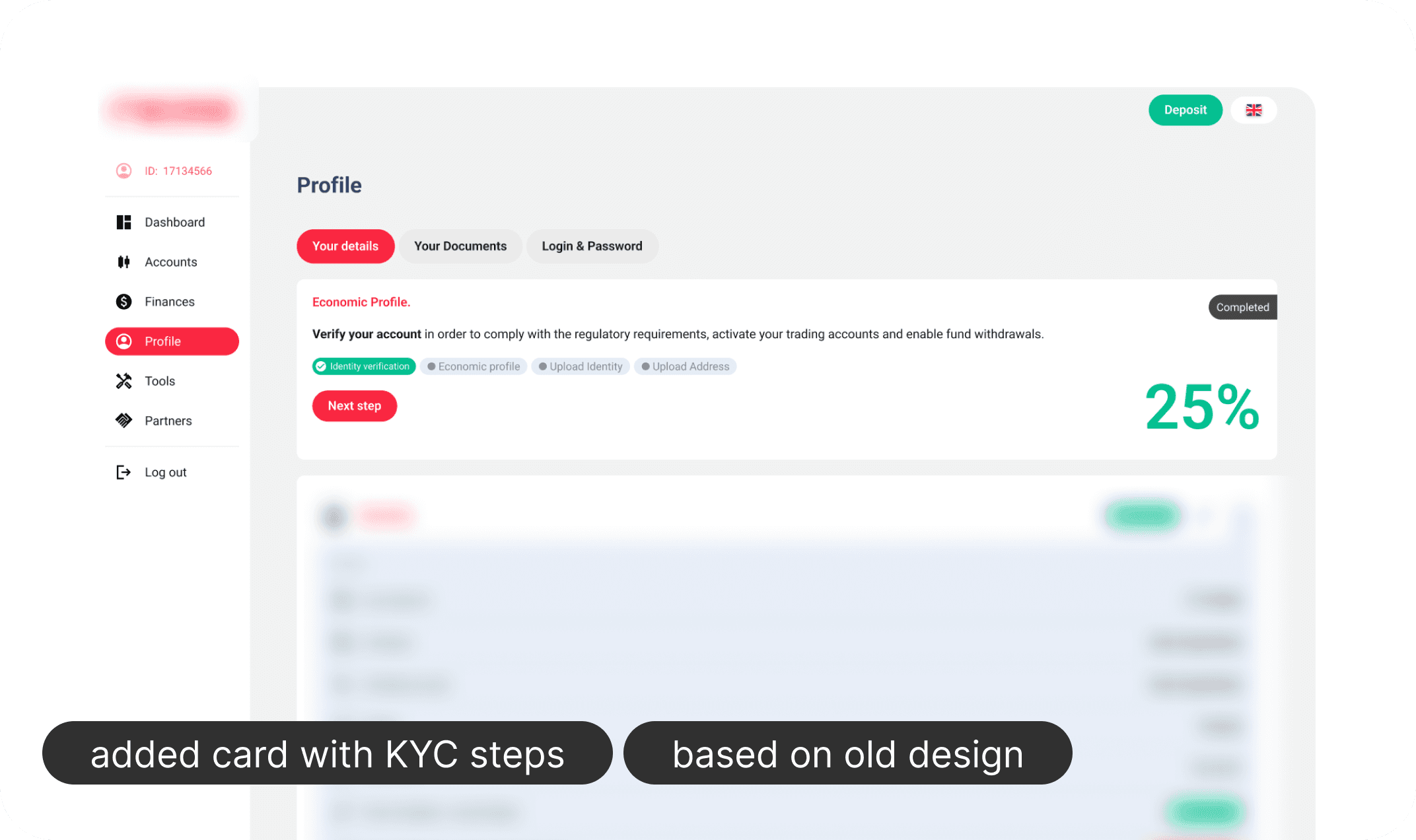
Profile Updates
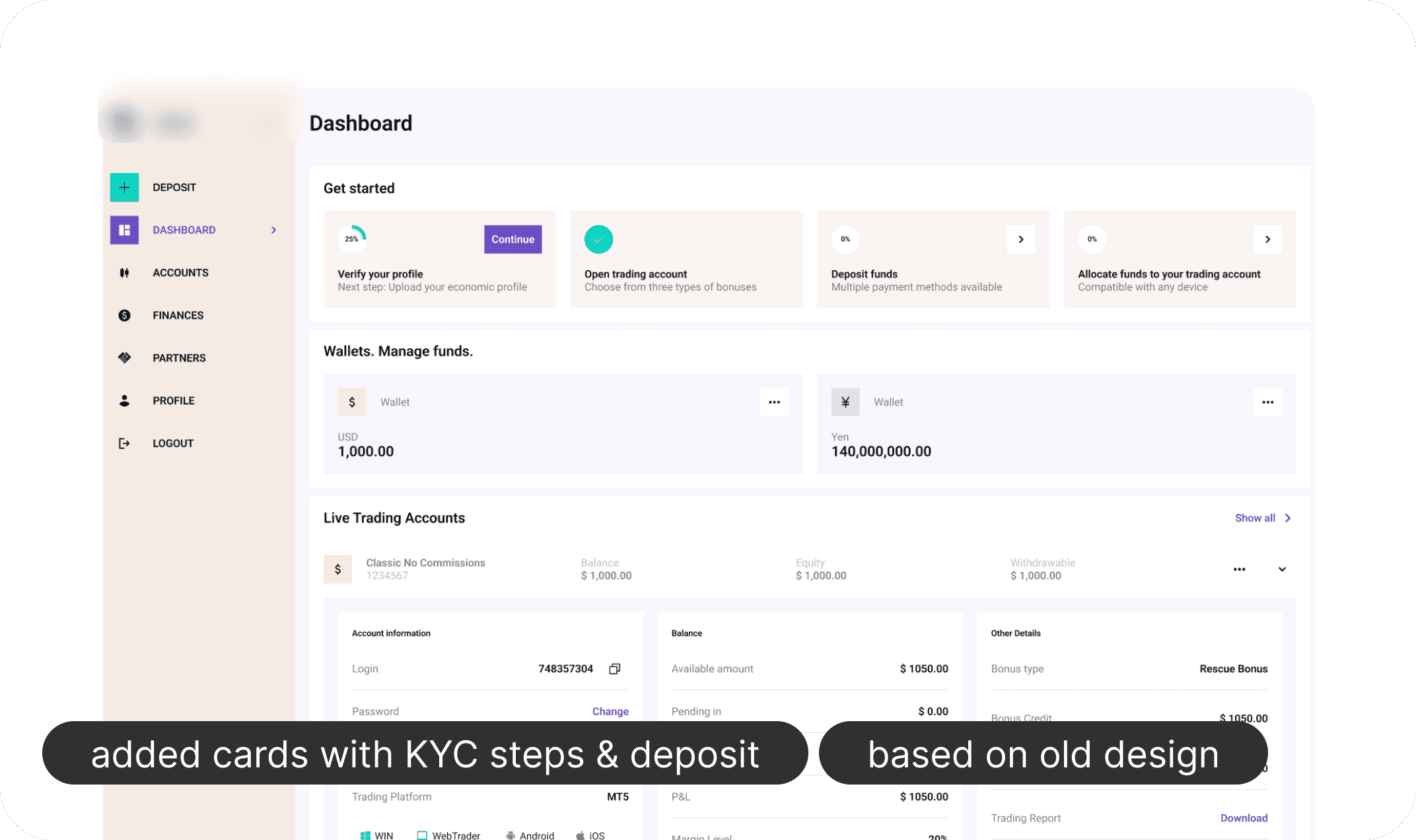
Dashboard KYC Cards
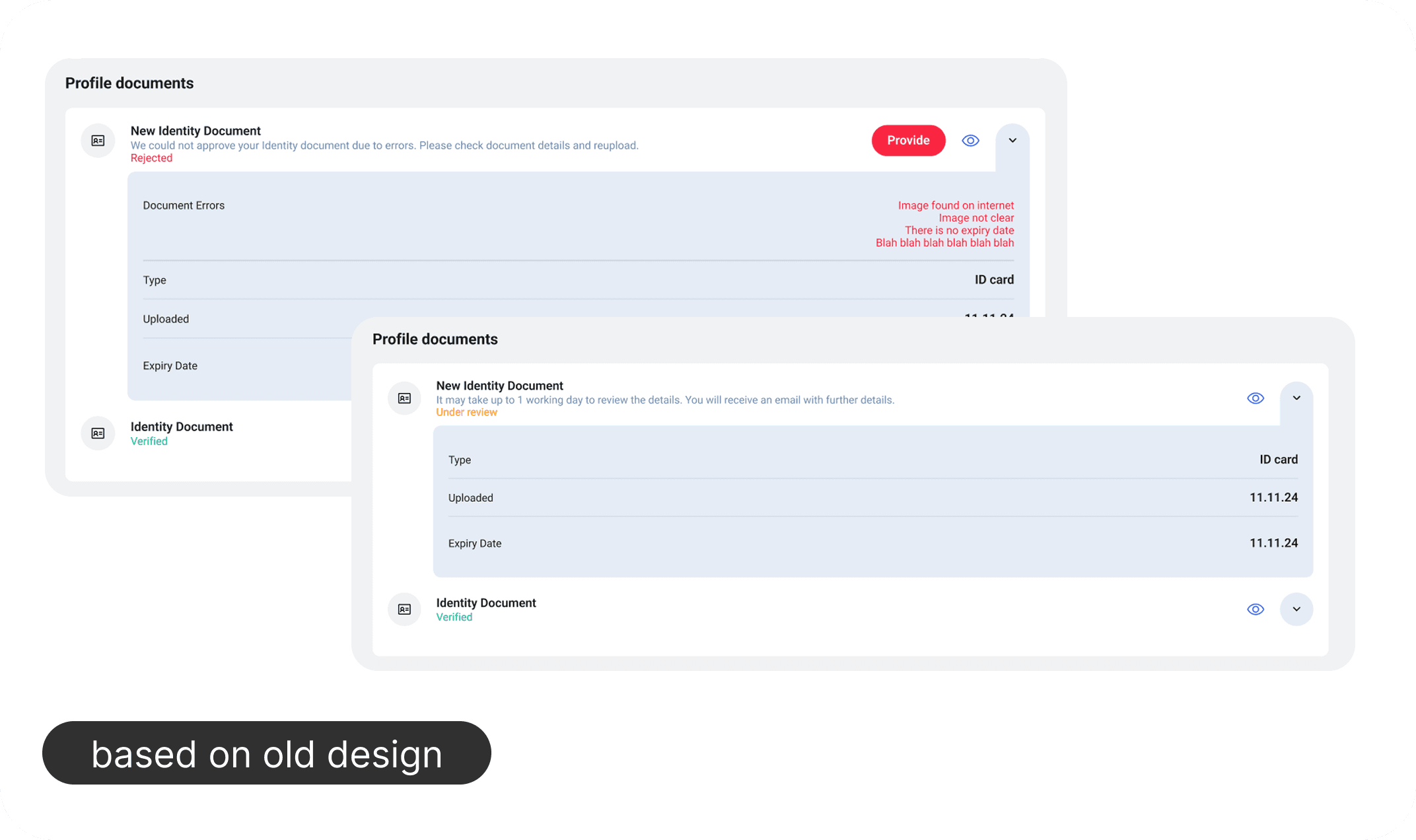
Status Communication
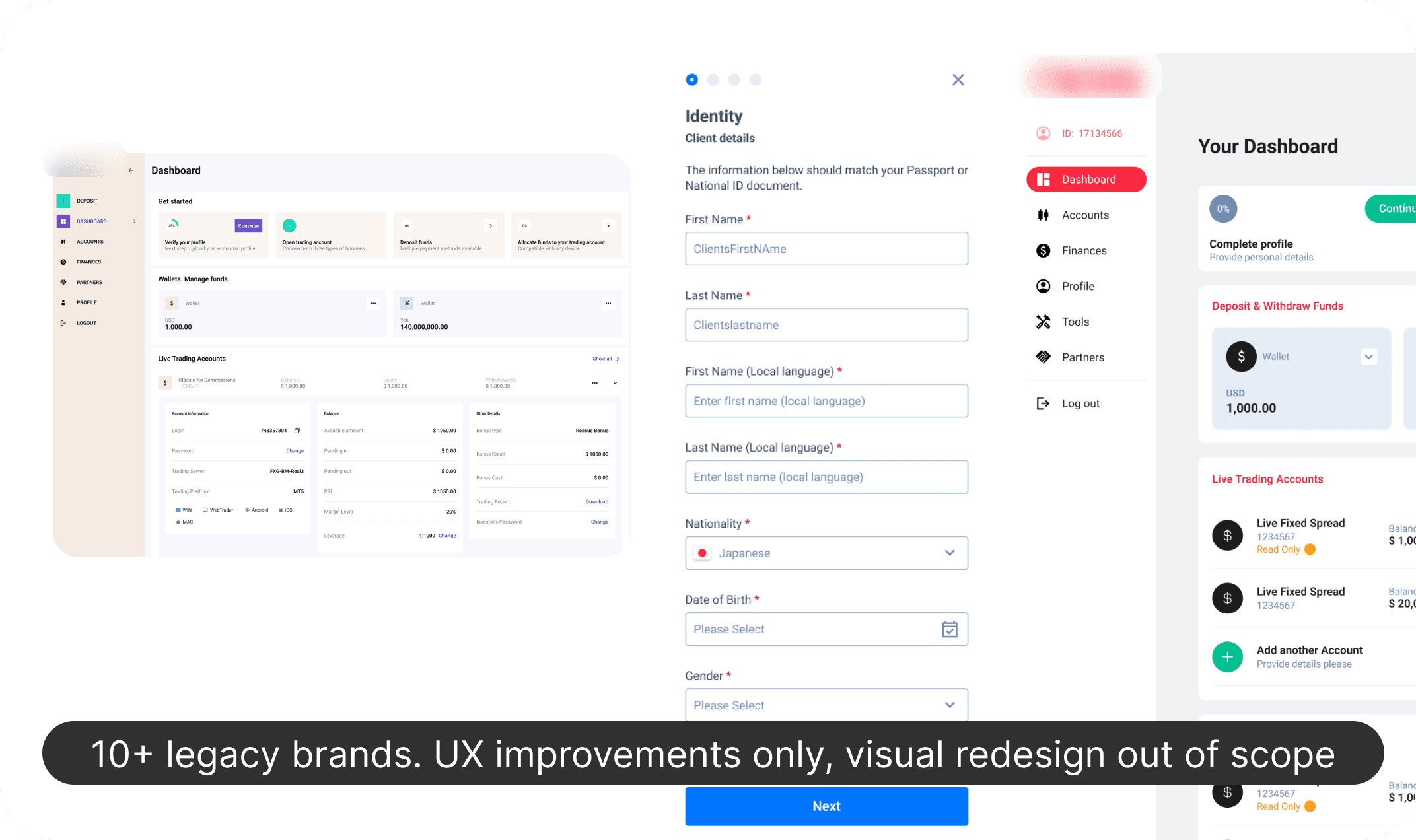
Multi-Brand Adaptation
Key Insights
Profile:
Long single-scroll profile divided into clear sections
Number of visible fields reduced — only what’s relevant shown by default
KYC section made visually prominent with clear status indication
Status descriptions and helper texts added throughout
Documents removed from user-facing profile — stored securely in backend, not accessible to user
Dashboard:
Users who registered but didn’t complete KYC were invisible in the old flow. Adding a persistent KYC progress card on the dashboard brought these users back into the activation funnel. Cards were designed in collaboration with marketing requirements — motivational, stage-by-stage, with clear next action always visible.
Status:
Three clear status states designed: pending, approved, rejected
Rejected state includes specific reason and clear resubmission path
Status changes now trigger email notification — system communicates proactively instead of waiting for user to check
Multi-Brand Adaptation:
Changes rolled out starting with highest-revenue brands. For brands with KYC in a popup — a legacy pattern that couldn’t be changed without a full portal redesign — a side panel approach was introduced: more space than a popup, without breaking the existing layout.
Stage 5:
Launch & Measurement
KYC Verification Outcomes — Feb–Aug 2023
No A/B testing — changes launched directly, starting with highest-revenue brands. Results tracked via analytics platform, Google Analytics, and support team reporting.
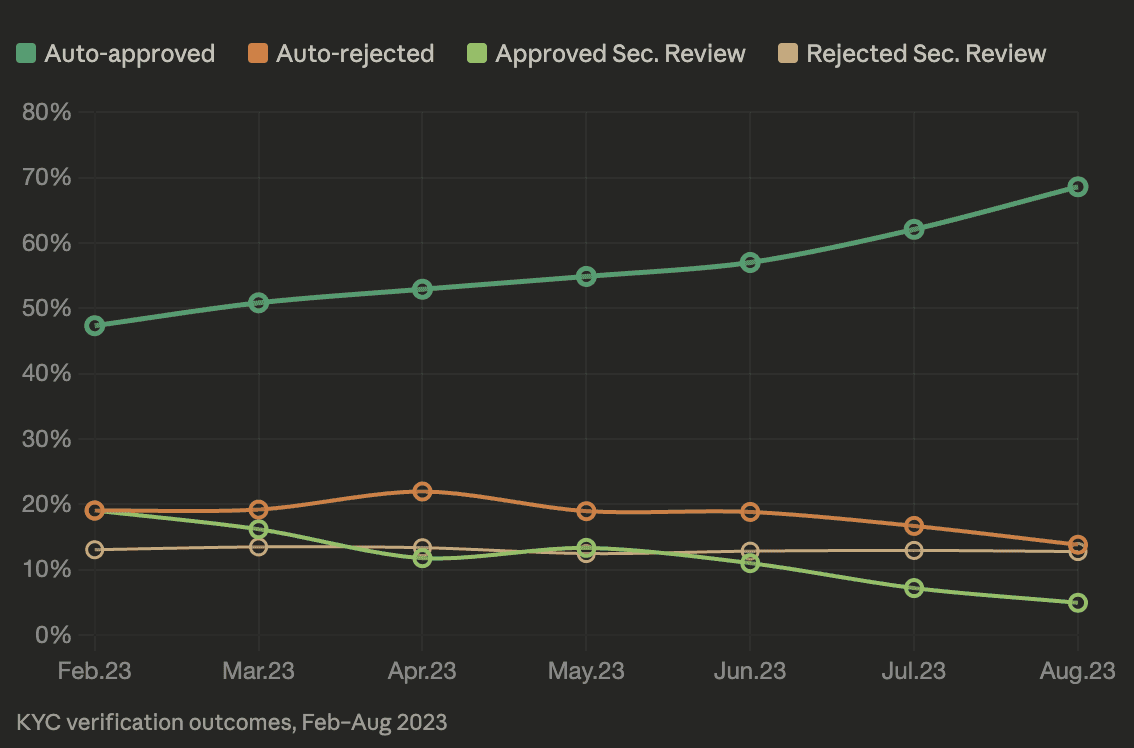
Auto-approval rate:
47% → 68.62%
users submitting correct documents on first attempt
Auto-rejection
19% → 13%
ewer wrong or unclear document submissions
Sec. Review — Manual approved
19% →
5%
significantly less human workload, faster processing time for users
Registration conversion
+60%
within 3 months — visible from week one
KYC support tickets
−20%
within 3 months — reported by support analytics team

Time to complete full KYC flow
6–8.6 min
Time to first deposit
4.8 min
Stage 6:
Edge Cases & Security
Discovered during the design process — not in the original brief.
Security gap
During a design review, the team identified that uploaded identity documents were visible and downloadable from the user profile. Anyone with account access could download personal documents. Fixed within the same release — documents removed from user-facing view, stored securely in the backend only.
Edge cases designed:
Document expired — clear state with re-upload prompt
Re-submission after rejection — guided flow with specific reason and next action
Processing state — user knows submission was received and is being reviewed
Empty states — first-time users who haven't started KYC yet
Failed auto-verification — smooth handoff to manual review without user confusion
Results & Impact
+21pp auto-approval rate
Auto-approved users grew from 47% to 68% within 3 months — more users reaching trading without manual review delays.
+60% registration conversion
Registration completion rate increased by 60% within 3 months post-launch. Results visible within the first week.
Manual review load reduced
Auto-rejected rate dropped from 19% to 13%. Secondary review approvals declined from 19% to 5%.
Support tickets −20%
KYC-related support requests decreased by 20% within 3 months — fewer users confused by statuses and rejection messages.
Session time increased
Users who previously left within minutes stayed longer and returned more frequently after completing KYC.
Security gap closed
Document visibility removed from user-facing profile — preventing potential data exposure in case of account compromise.
Did we achieve what we set out to do?
Auto-approval rate — grew from 47% to 68%, confirming users now upload correct documents on first attempt
Registration conversion — +60% within 3 months, visible from week one
KYC initiation rate — dashboard cards brought back users who registered but never started KYC
Manual review load — secondary approvals dropped from 19% to 5%
Support ticket volume — KYC tickets down 20%, confirming clearer status communication
Security gap — document visibility removed from user profile before any incident occurred
Learnings
Compliance UX is a trust problem, not a forms problem
Users don’t abandon KYC because it’s required — they abandon it because they don’t understand what’s happening.
Clear feedback, honest status communication, and visual guidance matter more than reducing field count.
Regulatory constraints are a design brief, not a blocker.
Mobile-first is a business decision, not a design preference
83% of new users came via mobile — but the product was desktop-first.
Making the case with data changed the approach for the entire project and produced a better desktop experience as a side effect.
Scope creep can be the most important work
The document security issue wasn’t in the brief.
Designers who understand the full user journey — not just their assigned screens — catch things others miss.
Sometimes the most valuable design decision is flagging something that isn’t a design problem yet.
Speed doesn’t require shortcuts
1 month from discovery to launch across 10+ brands with no A/B testing.
Speed came from clear prioritisation and tight scope — not from skipping research.
When you have the data, design follows quickly.


Some details are protected by NDA and not included here. If you'd like to learn more about the full process, challenges, and results — feel free to reach out.